
Tuesday Talk*: Did The Georgia Indictment Push Too Far?

Georgia criminal defense lawyer and former Fault Lines colleague, Andrew Fleischman, explains in a New York Times op-ed some of the legal and tactical problem arising from the scope and breadth of the Georgia indictment against Trump and his 18 co-defendants.

By assembling a sprawling, 19-defendant RICO indictment with 41 counts, District Attorney Fani Willis of Fulton County has brought the sort of charging instrument that has typically led to monthslong trials, complicated appeals and exhaustion for the participating attorneys. Now, as some co-defendants seek federal removal while others demand speedy trials in state court, we are starting to see the costs of complexity. Continue reading
Leave It To The Jury

Trump’s response to the Georgia indictment was to call it a travesty of justice as he did nothing wrong, but was just “challenging an election.” The accuracy of his claim aside, he’s been indicted, meaning that a grand jury found that there was probable cause to believe that he committed enumerated crimes. An indictment is merely an accusation, and when the accusation is that crimes have been committed, the mechanism by which our society determines guilt is a trial.

There being almost no chance that these accusations won’t end with a jury trial, unless dismissed before trial, Trump’s fate will be determined by twelve good citizens and true. This, Jesse Wegman contends, is the legitimate means by which guilt is decided. Continue reading

Court Holds Transgender Women Can Be Sorority Sisters

Aside from the question of whether the six sisters could sue pseudonymously, the substantive issue raised in Westenbroek v. Kappa Kappa Gamma Fraternity was whether it violated the rights of sorority sisters when the University of Wyoming chapter admitted a transgender woman as a member.

District Judge Alan Johnson disposed of the case swiftly.

Embittered by their chapter’s admission of Artemis Langford, a transgender woman, six KKG sisters at the University of Wyoming sue their national sorority and its president. Plaintiffs, framing the case as one of first impression, ask the Court to, inter alia, void their sorority sister’s admission, find that KKG’s President violated her fiduciary obligations by betraying KKG’s bylaws, and prevent other transgender women from joining KKG nationwide. A “woman”, say Plaintiffs, is not a transgender woman. Continue reading

No “Opt-Out” In Montgomery County

Public education is compulsory, and schools are required to provide students with a free and appropriate public education. But what’s taught is a matter of what the local school board decides. Montgomery County, Maryland, has made its decision, and if you want their FAPE, then your children are going to be taught about gender orientation and identity.

In this lawsuit, parents whose elementary-aged children attend Montgomery County Public Schools (“MCPS”) seek the ability to opt their children out of reading and discussion of books with lesbian, gay, bisexual, transgender, and queer characters because the books’ messages contradict their sincerely held religious beliefs about marriage, human sexuality, and gender. Last school year, MCPS incorporated into its English language arts curriculum a collection of storybooks featuring LGBTQ characters (the “storybooks” or “books”) in an effort to reflect the diversity of the school community.

Continue reading

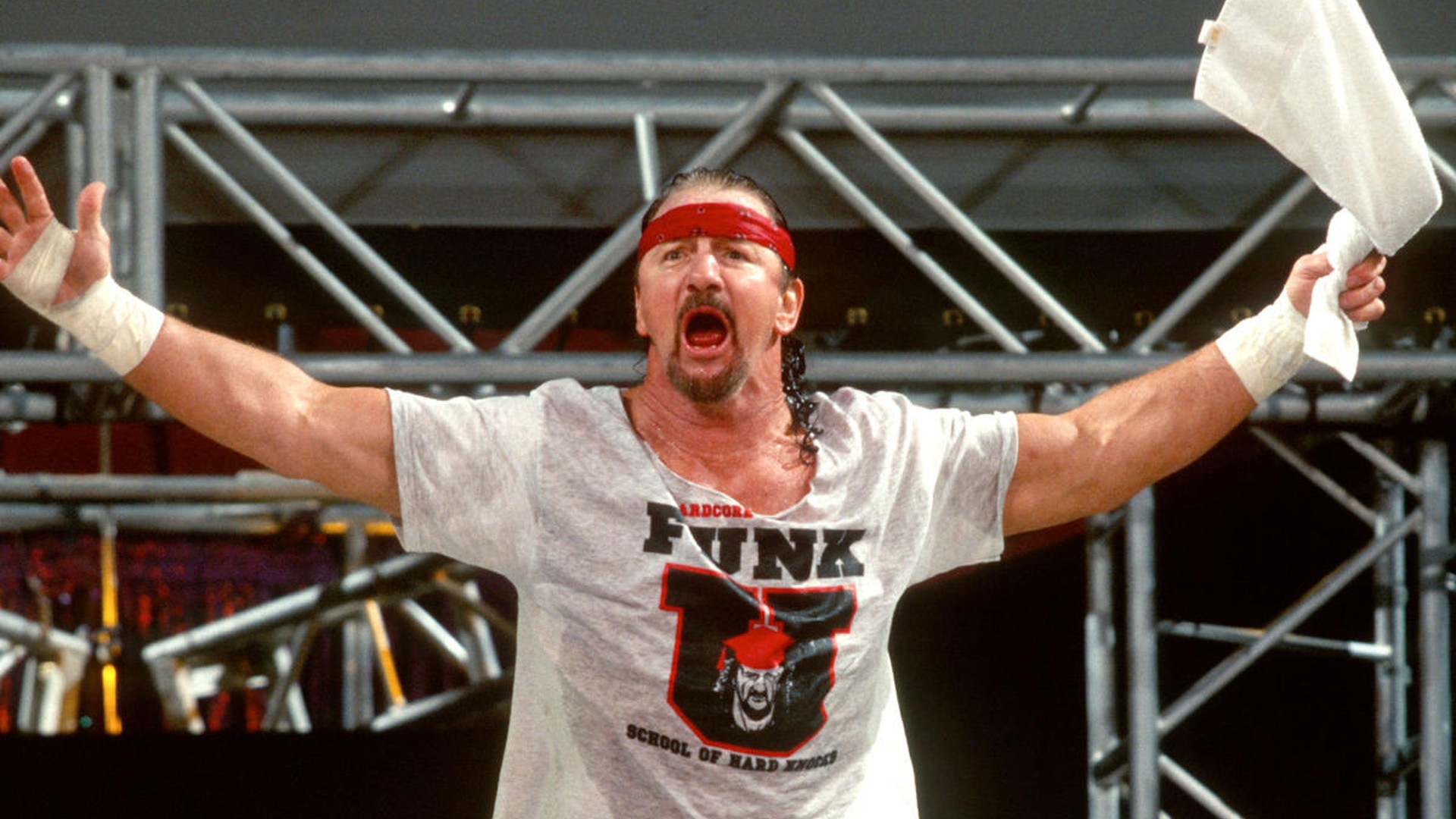
Seaton: In Memoriam, Terry Funk

Professional wrestling is a business full of people who call themselves “icons” and “legends.” The terms are basically throwaway marketing terms guys use to make themselves sound bigger than they actually are.

Conversely, Terry Funk, who passed this week at 79 following a protracted battle with dementia, was the very definition of an icon and legend.

Continue reading

What If The Prosecutor Just Gives Up?

One of the proudest reforms instituted by progressive prosecutors is the willingness to review old convictions with an eye toward either innocence or denial of due process. And they deserve  appreciation and approbation for doing so, or to be more accurate, for undoing the errors of the past that put innocent men in prison, or at least put men in prison whose convictions were obtained improperly.

But then, what if a progressive district attorney doesn’t conclude that a man was wrongfully convicted, but that for reasons unstated, he’s doesn’t deserve the sentence imposed? What if that sentence was death, but the prosecutor doesn’t support capital punishment? What if he just decides to confess error? Continue reading

2d Circuit Holds Vermont Law School Can Censor Mural

It’s not as if Samuel Kerson forced his mural commemorating Vermont’s role in the Underground Railroad upon Vermont Law School. He proposed it and they were all on board. But that was then, 1993, before art was subject to the potential of hurt feelings and offense should any observer disapprove. Then again, back in 1993, one would have confidently expected the ACLU to support art, and the right of artists not merely to express themselves but to not have their art permanently removed from sight.

But that was then, 1993. Today, that’s no longer the case. Continue reading

Can “Government Speech” Go Too Far?

The murder of George Floyd was neither the first time a black person was killed by police nor the worst example of the horrific police murder of a black person, but the stars aligned and so it became the catalyst for national recognition that black lives matter. The Lakeville, Minnesota, independent school district seized upon the moment to authorize the display of posters in classrooms that said “Black Lives Matter.”

Parents who objected to the infusion of what they perceived to be politics into the classroom sued and lost. in Cajune v. Indep. School Dist. 194, District Judge Jerry Blackwell held that the approved multicultural posters including the phrase constituted government speech. Continue reading

Tuesday Talk*: Will Bail Conditions Be Enforced?

The judge set bail at $200,000 for defendant Trump, which seems a rather silly amount. After all, if he’s a billionaire as he claims, then walking (or running) away from $200 grand really won’t make much of a difference in his life. If bail is warranted at all, then make it matter, as in $2 billion. But then, if the judge doesn’t see any potential for Trump fleeing the country and setting up a government in absentia if things take a turn for the worse, then why impose bail at all? Release him on his own recognizance unless there is a reason to set bail. Bail is not punishment, no matter how much you want to see him punished sooner rather than later, and over and over.

But the kicker here isn’t the money, which presumably Trump can afford by relying on the naivete of his supporters donations, but the conditions of bail. Continue reading

Education Is Not Above Economics

It’s not entirely clear what departments, what courses, will be eliminated. Some are named. Most are not. Are they eliminating basic liberal arts courses like English Lit or, as we used to joke before grievance studies became a thing, underwater basket weaving? Hopefully, it isn’t economics, because an education in economics seems critically important.

In proposing last week to eliminate 169 faculty positions and cut more than 30 degree programs from its flagship university, West Virginia, the state with the fourth-highest poverty rate in the country, is engaging in a kind of educational gerrymandering. Continue reading