
Talking About Collars

At a time when so many Gen Y are hiding from unemployment beneath their law school desks, it raises the question: What’s wrong with working for a living?  From the Pittsburgh Review-Tribune :

One 29-year-old fellow in Washington, D.C. — he has a degree from Notre Dame — considered going to law school, like many others in the lawyer-saturated town.

After watching his friends work long hours as paralegals — and watching his lawyer pals sign their lives over to their firms — he did something sensible.

He became an electrician’s apprentice.

What’s wrong with that?  It will break your mother’s heart?  She’s not going to live your life.  

There’s a tacit classism that permeates the American dream, that we start out working with our hands and end up working with our minds.  We climb the ladder of success by becoming educated, putting on a suit and tie and, eventually, spending our days uttering words while others listen with rapt attention.  At the end of this day, however, no house is built, no food is grown, not even a light turns on.

This isn’t to say there’s anything wrong with education or learned professions, but that there isn’t anything from plumbing or carpentry either.  Why one became a career of a higher order than another isn’t exactly clear, but it’s become so ingrained in our society that few thinks twice about it. We even distinguish criminal defense lawyers by collar color.

The shift happened over many years, of course. Industrialization moved Americans to the cities and, gradually, to paper-pushing jobs in the service industry.

Now we’re a country of white-collar snobs with an underdeveloped understanding of how things work.

The snobbery starts in high school. Parents and guidance counselors both point kids toward college and white-collar careers — they save the blue-collar careers for the kids whose grades aren’t so hot.

It makes no sense.

What doesn’t make sense is that people who would find success, and satisfaction, working with their hands as well as their minds are indoctrinated into believing that they are failures if they don’t get the degree and put it to its “highest and best use.”  Creating something of beauty, something that works, something that helps people to satisfy their needs, apparently, is viewed as a waste.  This is a shame.

A skilled laborer earns more than many lawyers do — and likely enjoys his work more. Show me a dozen lawyers and I’ll show you 11 people who have considered driving a cab for a living.

Skilled laborers are good for our country — white-collar folks are not always so good.

We have lawyers.  Lots and lots of lawyers.  And middle managers. And management trainees.  And kids sitting on the couch in their parents’ basement with very expensive degrees and a bag of Cheetos.  We don’t need more.  We need people who can create things with actual skills. 

It may not be for you. Or it may be exactly what brings you fulfillment, not to mention a good living and that balanced lifestyle you’ve been craving.  It’s not too late.  Your mother will get over it, but if you allow yourself to be pushed into a career that neither suits you nor has room for you, just because it’s what society deems a “success”, you may not.

There’s nothing wrong with good, honest work.  Nothing.

H/T Kathleen Casey
The End Of My K

It was about 25 years ago when I first met William.  Our relationship began by my questioning him, asking if he was going to be good enough for me.  I know, but I was much older then.  Williams response was to tell me that I was free to go elsewhere.  I stayed.

William was the proprietor of the Chinese Shirt Laundry.  Not dry cleaners.  Shirt laundry, where they only washed shirts.  You have two sets of choices.  Starch or no starch.  Folded or hanger.  My choice was heavy starch and hanger.  A shirt without a well-pressed collar looked wrong.  Without the starch, the collar would bend and curl.  Wrong.  Sure, the starch was a little hard on the neck, but that was the price one paid for dressing properly.  I never thought twice about it.

When William decided that he would wash my shirts, my insolence forgiven, he gave me a letter.  K.  It was written in indelible ink on the collar of my shirts.  No name.  No monogram.  No multiple letters and numbers combination.  Just one letter, K.  It was always K since then.

In the beginning, I would bring in shirts once a week and pick up my clean shirts.  Over time, wearing a suit to the office fell out of fashion.  When it wasn’t necessary, I wore a sports shirt, open collar and neck unstarched.  It eventually became about once a month.  Sometimes less.

I both liked and respected William.  He was a good guy, and he did a heck of a job on my collars.  Over the years, he was always at the counter.  Whether it was me or my wife, William knew to pull out my shirts when he saw us about to come through the door.  He knew which shirts they were.  They were K.  Always K.

It’s been more than a month since I took my shirts to William.  Between the heat and circumstance, I just didn’t have enough shirts to bother.  They can wait until it’s worth the trip.  When I arrived, William wasn’t there.  There was a young woman where William stood.  I asked about him, concerned that he might not be well.

“No, he’s fine.  He just retired.” 

There’s no justification for this, but I was annoyed.  He hadn’t told me.  It’s not like he should have told me, but after 25 years, I would have liked to hear it from his mouth.  Too late, however.  He was gone.  The young woman was his niece, and she had taken over the business.  I handed her my shirts.

“Oh, you’re K,” she said.  “You have some shirts here,” and she proceeded to pull a bunch of shirts off the rack.  They had a size 19 neck.  Mine is a 16.  But on the size 19 neck, I saw it.  The letter K.  My letter K.  On someone else’s collar.

For a while in the 90s, I was afraid that William was going to pack it in.  People stopped wearing suits and ties, and nobody without a suit and tie needs a laundered shirt with a starched collar.  Then there were the kids, who couldn’t care less if their collars were properly pressed or curled.  It didn’t seem likely that there were enough people who cared about their shirts to sustain William.  Yet he survived.  After the dotcom crash, William was still there.  As was I.  His K.

William’s niece asked me what I wanted to do about the K.  I asked her what she meant.  She asked whether I wanted to use my initials, or name, or something else.  I told her that I’m K.  I’ve been K for 25 years and, as far as I’m concerned, I’ll be K until I join William.  She took my shirts. 

There’s another K in town now.  A new K.  With a much bigger neck.  Now that William is gone, my K will be gone as well.

He was a good man, that William.  And I will miss my K.  I hope he taught his niece how to do collars.

A Prosecution, 2000 Years in the Making

To outsiders, the issue may appear trivial, even silly, but to Dead Sea Scrolls scholars, it is all-consuming.  And rather than chuckle at the vehemence with which these academics thrusted and parried, and took their stabs where they could find them, the New York County District Attorney has chosen instead to pick sides in this arcane debate by prosecuting Raphael Golb. 

What makes this significant to the rest of us is that his crime is sending out emails and writing blog posts under false names, sockpuppets, to bolster one side and attack the others.  If this is criminal, half the internet has committed a capital offence.

The story is convoluted and nuanced, as almost anything involving academics tends to be, but boiled down to its basics, Norman Golb, Raphael’s father, a University of Chicago professor, was the leading proponent of the “Jerusalem Libraries” theory of the Dead Sea Scrolls, which contends that the scrolls were hidden by various libraries in Jerusalem as the Romans laid seige to the city in the year 70. 

The prevailing theory, that the scrolls were created by a sect called the Essenes, thought to have lived near the Qumran caves where the scrolls were found, is favored by Christian scholars and supported by the “monopoly” in possession of the scrolls.  Lawrence Schiffman, head of Judaic Studies at NYU, was a leader of the “Qumran-sectarianists” and Golb’s academic nemesis.  If you want to know more about the details of the respective theories, look it up, but this makes naked mud-wrestling look tame.  Seriously.

As Jim Dwyer described it in the New York Times,

Mr. Golb is, or was, a guerrilla fighter in a cyberbrawl over the Dead Sea Scrolls, a war about the origins of 2,000-year-old documents that has consumed the energy of academics around the globe.

He was being arrested for fighting dirty.

Mr. Golb is 49 years old and had 50 e-mail aliases. He used pseudonyms to post on blogs. Under the name of a professor he was trying to undermine, prosecutors charged, Mr. Golb wrote a quasi confession to plagiarism and circulated it among students and officials at New York University.

The point of all this nonsense was to influence the academic debate, for Golb to have his father’s theory taken seriously and allowed to be heard amidst the “monopoly” clatter.  Mind you, Schiffman was busy ridiculing and attacking Golb as well.

So Raphael Golb wrote.  And wrote and wrote.  Using plenty of names to suggest that there was a strong following in support of his father.  The other side played the same game.  The difference was that Golb created gmail accounts and sent out emails, and one of the names he used was Lawrence Schiffman, and the emails were sent to Schiffman’s grad students and dean, suggesting that he had committed plagiarism in an article.  A First Amendment and substantive grounds, arguing against this effort to criminalize the speech in the emails, and contort this nasty academic fight into a fraud as if monetary gain was involved, to no avail.   But the implications of this prosecution on internet free speech are enormous, possibly as significant as those raised in the Lori Drew prosecution. 

While juvenile and generally frowned upon, the use of sockpuppets and dubious parody emails purporting to come from one’s nemesis is common in online battles.  The arguments over pseudonymous posting is a perpetual battle over responsibility and accountability, but there’s no doubt that many people feel that they can’t speak freely under their own name and feel compelled to create personas to further their agendas.  Is this criminal?  Should this be criminal?

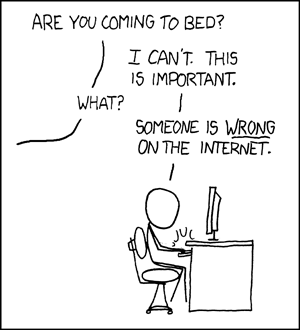
The argument that it’s the ideas that matter rather than the names used by the proponents has long been the foundation for free speech, both on the internet and in the real world.  That Raphael Golb felt that the only way to further his father’s ideas was to present them under pseudonyms, and that he created some fake gmail accounts to send out spoof emails that no one would seriously believe came from the purported sender, may well be viewed as, well, just plain stupid and childish.  But it’s no different than the stupid and childish approaches taken by many others on the internet, who stay awake at night because “someone on the internet is wrong.”

That the prosecutors in Manhattan think this conduct is the sort that requires prosecution, however, is beyond belief.  If Schiffman thinks Golb defamed him by accusing him of plagiarism, then let him sue for libel.  But to contend this is identity theft and impersonation is ludicrous.  There’s nothing about this ugly battle online, which isn’t a whole lot different than a million other ugly battles online except the parties wear tweed, that changes this from a hot and nasty debate into a crime.

It’s long been clear that courts, from the Supremes in Washington to the Supremes on Centre Street, aren’t the most internet and tech savvy folks around.  What seems so obvious, and relatively trivial, to us can appear strange and maybe even malevolent to those who have never been party to a flame war.  But are the prosecutors in Manhattan that out of touch, that unaware, that they seriously believe this to be an appropriate prosecution and Golb a criminal threat?

“So what are you in for?”
“Sockpuppeting.”
“Oh.”

And this is all about the Dead Sea Scrolls.  Can you imagine what would happen if it was over something that happened in the last, say, 500 years?  In the meantime, all you pseudonymous posters better watch your step.  Sheesh.

Paterson Kills Database of the Innocent

It’s not much of a stretch to argue that the more information government possesses about people, the easier it is to identify the perpetrators of crime.  Heck, the more power government has to do much of anything, the easier it is for government to do whatever it wants to do.  And so the argument went with the New York Stop & Frisk database.

The problem was that anybody who was stopped became a member of this less-than-exclusive club.  No crime needed.  Innocent or not.  Stopped because some cop thought you looked at him cross-eyed, no matter.  They took your info and put you into their computer under the “you-never-know” theory of policing.  Commissioner Ray Kelly thinks it’s a great idea.  So does Mayor Michael Bloomberg.

Governor David Paterson, in signing a law prohibiting the maintenance of this database of the innocents, doesn’t see it that way : 

“This law does not in any way tamper with our stop-and-frisk policies,” Paterson said. “What it does is it disallows the use of personal data of innocent people who have not done anything wrong. … That is not a policy for a democracy.”

Imagine, the cops can’t collect and maintain data of the innocent.  Wild, right?  Crazy?  Putting the safety of every New Yorker at risk?  Maybe not.

Last year alone, the New York Police Department stopped 575,304 people, mostly black and Hispanic men, and recorded their names, addresses and descriptions into an electronic database. The stops are based on a standard of reasonable suspicion, lower than the standard of probable cause needed to justify an arrest. Only about 6 percent of those stopped are arrested.

But that’s more a condemnation of the stop & frisk policy, given that 94% of those whose right to be left alone is subject to the whim of a police officer and his ability to mouth the words “furtive gesture.”   What about the post stop use of the data collected from the innocents?  Via the New York Times :

All told, the summaries provided by Mr. Kelly — the fruit of the police policy of entering into a database the names and addresses of everyone stopped on suspicion of a crime in the city’s streets, whether or not they are arrested — covered crimes dating to 2005. City police officers have made roughly 2.5 million of what are known as stop-and-frisk street encounters since then.

The examples Mr. Kelly provided included 170 cases from all five boroughs, mostly from the last 18 months, for at least 17 murders, 8 sex crimes, 36 robberies and 67 burglaries. An arrest resulted in most, but not all of the cases, the documents show.

From the Kelly side of the equation, this proves that the database of the innocents is working, as 170 cases were solved.  But Gov. Paterson was looking at it through the eyes of the 2.5 million people stopped and frisked, whose information would reside in perpetuity in the bowels of a police server, and found this showing insufficient.

A look at these 170 cases shows instances where the stop-and-frisk data clearly did assist investigators in tracking down perpetrators. In many cases, the data provided shortcuts that speeded investigations along, such as providing hangouts of a known suspect or the names and addresses of potential witnesses known to frequent a location where a crime occurred.

But in many of the cases, it was hard to determine how helpful the data was in solving crimes, because the information provided to the governor was, in his words, “at best inconclusive.”

In many of the cases, however, the summaries provide strong evidence that the stop-and-frisk data played a less than essential role — and sometimes hardly any role at all.

The collection of data by the government on its citizens is perhaps the slipperiest of slopes we face in the digital age.  Here it’s information.  The collection of DNA from everyone arrested, even in the absence of conviction, is very much a part of this effort on the part of government to eliminate any vestige of privacy that once characterized American freedom.  Most people lack the capacity to follow this trend to its logical extreme, or anticipate technological advancements that will fundamentally alter what government knows about us.

While Gov. Paterson’s signing this law may be viewed as a small step, maybe just a baby step, in light of the rampant and flagrant use of stop & frisk of the innocent, not to mention DNA databases of all arrestees, it is a step in the right direction.   There was a serious question whether there was any chance, any hope, that anyone in government would pull back from informational hegemony once they realized the power they could wield.  It looked like a slippery slope with no conceptual ledge in sight.

It’s not enough.  Personal privacy has never been as fragile as it is today, and the significance and abuse of databases may well prove to be the most dangerous threat to freedom ever known.  No despot in the history of man had such information available to him.  That Paterson implicitly endorsed a stop & frisk policy that has subjected millions of completely innocent blacks and Hispanics to being manhandled by the police at will is a shame and a disgrace. 

But at least it’s a step in the right direction, which is better than the alternative.

H/T Ed at Blawg Review, who really wants his DNA back.

The War with Sparta

War has broken out between some Texas criminal defense lawyers and Sparta.  Not the Greek City/State, but an SEO marketer who goes by unpretentious name , no doubt because SEO Spammer Girl wouldn’t have a distinctive brand.  The initial skirmish began with Austin criminal defense lawyer Jamie Spencer, whose comments were bombarded by Sparta Townson on behalf of lawyers who wanted to make a dent on Google via Jamie’s blawgs popularity.

Jamie, who is a far nicer fellow than most, called Sparta to suggest she not cause her clients harm by making them the target of ridicule.  Sparta hung up on him, after telling him that his open comments are her playground.  Whatcha gonna do about it, boy?  Mark Bennett answers the question at Social Media Tyro.

It’s not like Guru Girl Sparta shouldn’t be a little more circumspect in her dealings.  She’s already being sued for defaming the ex-boyfriend of her girlfriend, and subject to an injunction for behaving like a nasty, spoiled, unbalanced three year old.  This should be sufficient for Sparta to realize that the internet isn’t completely lawless, and that whatever fine idea pops into the head of Guru Girl Sparta isn’t likely to reflect the state of the law that applies to less Guru-type people. 

Do Guru Girls spend their off hours playing cyber-stalker to attack and libel ex-boyfriends for practice? Is this how they put that SEO expertise to good use?  Is this how they want to be known online, as another internet nutjob who falsely flames her enemies?  Maybe it’s just me, but this doesn’t strike me as conduct becoming a self-proclaimed Guru Girl.  And yet Sparta battles on.

It turns out that Sparta is trying to scare up business in a variety of quarters, including the Harris County Criminal Lawyers Association, with a proposal that will blow the socks off anybody who has a clue at what a website should cost.  Of course, one could wonder whether Sparta, at the prices she hopes to charge, might put some effort into correct spelling, given her apparent challenge as shown on her own blog.

That Bennett posted Sparta’s proposal to the HCCLA appears to have outraged Sparta.  :

I sent a proposal to a particular counties criminal lawyers association and it was sent with the following message in the email:
This electronic message contains information from Internet Guru Girl. The contents may be privileged and confidential and are intended for the use of the intended addressee(s) only. If you are not an intended addressee, note that any disclosure, copying, distribution, or use of the contents of this message is prohibited. If you have received this e-mail in error, please contact reply to this email.

Then one of the particular attorneys posted it on his blog.
Another one thinks it’s unsolicited and is obviously another UNINFORMED one.
AND IT WAS “Solicited” by a board member.
This seems to be unethical and questionable legally???
AND IT WAS “Solicited” by a board member.
Sparta Townson

It never ceases to amaze me that people persist in the irrational belief that by including the words “privileged and confidential” in the footer of an email, with the ominous “prohibited” to follow, that somehow makes it so. 

I’ve come to realize that internet marketers go to sleep at night hoping that they will wake up to be “professionals” so they won’t be cast into the sea of snake oil salesgirls, but they aren’t.  They are just people pretending to have expertise that doesn’t really exist to fool people who have even less clue how this whole internet thingy works.  And if anyone is foolish enough to pay the numbers Sparta is asking, then they get what they deserve (with or without spellcheck).

But Sparta Townson suffers from the bizarre delusion that she dictates what becomes of her electronic communications.  The only confidential communication in her world is the one between her lawyer and defendant Sparta.  Sparta has no privilege other than that, and doesn’t create a privilege because she can copy and paste someone else’s prohibition. 

As a courtesy to this Internet Guru Girl, I offer some thoughts.  When you send out an email, the recipients can do whatever they please with it unless they have agreed, in advance, to keep it confidential.  You cannot dictate the confidentiality of your email.  Even if your quote was solicited by someone, that doesn’t create an agreement to maintain confidentiality unless it was a condition agreed upon in advance.  You, Guru Girl Sparta, lack the capacity to prohibit anyone from doing anything.

There are, of course, limits that the law imposes, such as libeling the doctor ex-boyfriend of your girlfriend.  But there is no law that requires others to conceal the contents of your email.  Sorry that it makes you unhappy, and doesn’t comport with your Guru Girl understanding of how the world should treat someone as important as you who commands others to do as she says, but that’s just not how it works.

On a more upbeat note, thank you, Sparta, for not spamming my blawg with your efforts at promoting those foolish enough to pay you.  I’ve wasted enough time dealing with other spammers, and certainly don’t need more marketing trash to deal with.  Plus, I’m not nearly as nice as Jamie when it comes to such matters, and might be inclined to point out the foolishness of your clients and cause them some embarrassment. 

One final piece of advice, Sparta.  Try spellcheck.  You really come off poorly, given that you call yourself Internet Guru Girl. 

Survival

Some see this video as controversial.  As a survivor of Auschwitz, he can celebrate his survival any damn way he pleases.

I hope this will be seen by every person alive today.  Too many aren’t.  Let him dance.

Comments, with a side of maggots?

From Boing Boing, this is offered as “the most accurate analogy” on the subject of comments “ever”:

Weingarten, preach it : “I basically like ‘comments,’ though they can seem a little jarring: spit-flecked rants that are appended to a product that at least tries for a measure of objectivity and dignity. It’s as though when you order a sirloin steak, it comes with a side of maggots.”

That is one god-awful ugly image, but is it really that accurate?  While I’m certainly not in league with the big boys on the subject of comments, I can’t agree that the situation is that bad. 

Comments can be a nightmare, between the spam, the stupid, the angry and the nutjobs.  It is, without a doubt, a burden that few readers appreciate to keep the comments on topic and reasonably worth reading.  But it’s part of the gig.  One quickly learns that the internet is a very big place, with people of all points of view, often firmly held and with need to burst out at every opportunity.  Touch on a hot button subject and a swarm of interested folks will descend like locusts and make certain that everyone knows their position.

The vast majority of these comments reflect relatively well-conceived thoughts.  A significant minority reflect no thought at all, but see comments as a soap box from which to scream to anyone who will listen.  Some of these are just people suffering from Dunning-Kruger, while others suffer from more pathological problems.  As I said, it’s a big internet.

To call them maggots, however, is over the top.  There is certainly a dearth of well-reasoned rants, and a surplus of conspiracy-theorists and generalized haters, but to a large extent, these positions are all derived honestly and held dearly.  People may lack the degree of thought, nuance, focus and comprehension that one might want to have in a discussion about the issues raised, but interesting ideas still come out.

Even the spammers, the bane of a blawger’s existence, are understandable.  While the rationalization that our offering the opportunity for them to spam away by dint of our merely being here may be utter nonsense, if one views the blawgosphere as merely a marketing opportunity (as many lawyers do), then the spammers’ view of snatching their piece of someone else’s pie isn’t entirely insane.  It’s a nightmare, but one that makes some sense from their warped perspective.

Of course, there are the trolls, those who post comments for no better purpose than wreaking havoc with others, insulting and attacking to compensate for their incredibly small genitalia and lack of a real life.  I try to keep a hand on the delete button so that they don’t have their way here.  On the other hand, a commenter isn’t a troll merely because she disagrees with a position or, as happens from time to time, thinks I’m a blithering idiot.  There’s room for disagreement, though I expect commenters to remember that this is my soap box, not theirs.

I’ve struggled with comments since the beginning, often growing disillusioned with the nature of the comments and the lack of understanding of my purposes in posting.  It grows incredibly tiresome having to read my thoughts as filtered through the eyes of others, particularly when they project their own lack of experience and understanding onto me.  I’m irked when someone characterized what I’ve said in a way that significantly misapprehends my point.  But then, someone posts a comment that’s incisive, illuminating, maybe even brilliant, and I remember why we’re having the discussion in the first place.

So maggots?  No, it’s not the best analogy, or even a good analogy.  Readers come at will, with the full spectrum of experiences and intelligence, motives, fears and needs.  I can neither make someone read nor stop them.  I can remind them not to post links, especially to themselves, and to keep on topic even though they believe their story is the most fascinating one ever.  But it’s the price one pays for the flashes of brilliance that appear in the comments, the ones that make it worth my time to deal with comments in the first place.

If the great comments are an aged Sirloin, then the bad ones are a steak poorly cooked.  When I send it back to the kitchen and tell the cook that his comment doesn’t meet my expectations, some will get angry with me and tell me that I’m the meanest, worst, stupidest, most awful person in the world.  After all, it’s all about them.  Others will understand that this is my blawg and, should they care to read and comment, cook the steak a little better.

That doesn’t mean that I’m right, either about the substance of my posts or my taste in steaks.  It just means that this is my blawg and that entitles me to decide how I want my comments cooked.

Another Video, Another Acquittal, Another Cop

New York City juries may be the place of intellectuals, sophisticates and metrosexuals, but that doesn’t mean they don’t like their cops.  Or at least, accept the premise that working the thin blue line is simply too hard and challenging to expect much by way of discretion and restraint.

Walter Harvin was an Iraqi war vet on his way to see his mother in the Hostas Houses on West 93rd Street when Police Officer David London decided to play doorman.  It’s nothing unusual for a person who seeks entry into a project without a key to be questioned by police as to his business. and required to show identification.  Harvin doesn’t appear to be the most cooperative person.  From there, things got ugly.  Via David Feige at Indefensible :

Naturally, Officer London wrote it up as him defending himself from Harvin:

The confrontation started, Officer London testified, when he was closing the front door to the housing project as Mr. Harvin tried to squeeze in. Officer London said he asked Mr. Harvin for identification or proof that he lived in the building, and Mr. Harvin immediately became irate, swearing at him and refusing to stop.

Officer London said he struck the first blow after Mr. Harvin lunged toward him. Officer London said he thought Mr. Harvin was about to punch him, and he continued to strike Mr. Harvin while he was on the ground because he continued to thrash around and yell threats.

Long story short, the charges against Harvin were dropped after the video appeared and Officer London was prosecuted.  This video was played for the jury.

Officer London, who has been on desk duty since the episode in July 2008, showed no emotion as the forewoman read the words “not guilty” on each of the counts against him: second-degree assault, filing false records, falsifying business records and making a false written statement.

But moments later, Officer London — flanked by his lawyers, Stephen C. Worth and Cary London, who is not related to the officer — bowed in his seat and sobbed, clutching crumpled tissue and a small red Bible in his fist.

“I’d like to thank God and my family,” Officer London said in a soft voice outside the courtroom after exchanging tearful embraces with his supporters.

The bible was a nice touch, no?  Not guilty on all counts, including the false allegations used to initiate the prosecution against Harvin, alleging that London was attacked. 

And note the success of police union lawyer Steve Worth.  While his co-counsel, Cary London, isn’t related to the defendant, the 2010 admission is related to Stuart London, who was busy at the time defending Patrick Pogan from the Big Shove.  Defending cops on behalf of the Union is a great family business, even if daddy Stuart wasn’t as successful in getting Pogan off for the false allegations against his victim, Christopher Long.  Still, given the sentence of conditional discharge, it’s not like New Yorkers don’t appreciate their cops.

And what’s the lesson here?  From the mouth of Steve Worth:

Mr. Worth said, “We’re happy people are realizing police work doesn’t always look pretty, but that is the nature of the job.”

It’s just the nature of the beast.  Freedom isn’t free, you know.

H/T Lee Stonum

The Collateral Sentence of Death

The title of Eugene’s post, “We Affirm, But Only Because We Are Unable to Write a Principled Opinion Reversing,” sucked me in.  You’ve got to admit, it’s a great line.  The post is about a Wisconsin decision concerning whether the a defendant must be informed that his plea will result in the loss of his Second Amendment right to keep and bear arms.

A full understanding of charges against Neis would include that by pleading guilty, Neis would lose the right to possess a firearm, and would be prosecuted for a federal crime if he did so. This is a significant enough right for United States and Wisconsin citizens that we have included it in both constitutions. It is difficult to conclude that this right is nonetheless so insignificant that it is only a “collateral” consequence of pleading guilty to a disorderly conduct charge. But that is all it is.

This got me thinking.  The case is long over and the former defendant is sitting in his living room with his wife and kids (forget whether Neis has a wife or kids, as this is just my pondering the “what if”), and a couple of armed men bust through the door.  The fellow, who would otherwise have a gun available to him, sits there defenseless.  Given his own choice, he wouldn’t be as he’s inclined to possess a gun for self-defense.  One of the armed me, the big, burly one with the scar on his left cheek and a tattoo that reads “Mother” on his forearm, doesn’t care for the way Neis is looking at him.  He points.  He shoots. Neis dies.

While this could happen to someone disinclined to possess a weapon, or someone who possesses a weapon but doesn’t have it readily available at the moment of need, or any number of other variations which could produce the same outcome, my scenario involves a person who, but for the deprivation of his weapon, would have and could have defended his life.

The sentence of the court is that Neis cannot defend himself from a fatal attack.

Natural law is that a person is entitled to act to defend himself from death at the hand of another.  No one need suffer his own death to be a good, law-abiding citizen.  It’s a bottom-line thing.  Better to be judged by 12 than carried by six.  While this cute phrase is misused far too often, there are certainly situations where imminent death justifies action.

But Neis, well, can’t take action.  He’s a law-abiding guy now, having learned his lesson well and complying not only with the sentence of the court, but the collateral demands that the law places on a sentenced defendant.  The law says no guns, so no guns it is.  The law says that a person once convicted must stand naked against a threat to his life, so Neis is unarmed.

Obviously, my imagined scenario isn’t an everyday occurrence, and may even be a bit on the fantastical side, but it’s not so far-fetched that it can’t happen.  If you happen to be Neis at that moment, nothing could be more meaningful than the ability to stop the big, burly guy before he puts a bullet in your head.  Nothing could be less collateral.

The reasons why a government would not want a criminal to have a gun are clear and obvious.  Some, perhaps most, would use it unlawfully against another, and yet there would be no way to stop the criminal from exercising his right to keep and bear arms.  And yet, there doesn’t seem to be a rational argument to suggest that a former criminal should be incapable of defending himself from violent attack. 

While it might be argued that his former life of crime shifts the balance against him, that doesn’t make much sense for crimes that didn’t involve violence, or don’t suggest that the defendant will be violent in the future.  The “forfeiture of the right” argument makes no sense due to disproportionality.  The “undue” burden of differentiating between those who should, and shouldn’t, lose their rights may be a problem for government, but the Constitution isn’t about making people’s rights subject to government ease.  Besides, if you compare the burden of being murdered with the burden of due process, the former wins.

To the guy with a green card who’s been here for 34 years, has two kids in college and can’t speak the tongue of his mother country, deportation after a minor felony with a sentence of probation is hardly collateral.  To the unarmed guy sitting in his living room with his wife and kids staring at the big, burly guy with the scar, tattoo and gun, the loss of his right to defend himself is even less collateral. 

Sure, this won’t happen all that often, but to the one in a thousand, or a million, who finds himself in that situation, does he deserve a collateral sentence of death?

Free To Kill Again

A bit overwrought, since it’s not as if Sharon “Killer” Keller actually did the killing.  She just didn’t do enough to give the defendant a chance to stop the killing, as would be demanded of the Chief Judge of the Texas Court of Criminal Appeals.  That’s right, the report of the Texas Commission on Judicial Conduct is in, and Killer Keller’s conduct brings discredit on the judiciary or the administration of justice.

Via Jeff Gamso, the decision :

Now the Commission has ruled.  In a 19 page document (below), the Commission set forth 119 Findings of Fact demonstrating that Keller violated her duty, then failed to disclose her misconduct to her colleagues, and brought national condemnation on herself and the court.
The Commission then set forth “Conclusions Regarding Binding Obligations.”
  1. Judge Keller’s failure to follow Texas Court of Criminal Appeals’ Execution-day Procedures on September 25, 2007, and failure to require or assure compliance by the Court of Criminal Appeals General Counsel and clerk staff with respect to Richard’s right to be heard, constitutes willful or persistent conduct that is clearly inconsistent with the proper performance of her duties as a judge of the Court of Criminal Appeals and as the Presiding Judge . . . .
  2. Judge Keller’s failure to follow Texas Court of Criminal Appeals’ Execution-day Procedures on September 25, 2007, and failure to require or assure compliance by the Court of Criminal Appeals General Counsel and clerk staff with respect to Richard’s right to be heard, constitutes willful or persistent conduct that casts public discredit on the judiciary or the administration of justice . . . .
  3. Judge Keller’s conduct on September 25, 2007, did not accord Richard access to open courts or the right to be hear according to law.  Judge Keller’s conduct constitutes willful or persistent conduct that is clearly inconsistent with the proper performance of her duties as a judge of the Court of Criminal Appeals and as the Presiding Judge . . . .
  4. Judge Keller’s conduct on September 25, 2007, did not accord Richard access to open courts or the right to be hear according to law.  Judge Keller’s conduct constitutes willful or persistent conduct that casts public discredit on the judiciary or the administration of justice . . . .
The Commission also concluded that Keller violated the “Aspirational Goals” of a judge.
  1. Judge Keller’s conduct on September 25, 2007 demonstrated a failure to cooperate with other judges and court officials in the administration of court business . . . .
  2. Judge Keller’s conduct on September 25, 2007 demonstrated a failure to require court staff under her direction and control to observe the standards of fidelity and diligence that apply to herself . . . .

Lots of tough language like “wilful or persistent,” and discredit.  Scathing.  None of the confused purpose of the special master’s report.   And a sternly worded public warning to never, and I mean never, do it again.

Some folks question whether this system, the one that puts ordinary people in prison for long stretches at a time, and even takes the life of a person deemed unworthy of living it, is really just a sick joke that’s played on a naive and unsuspecting citizenry for the benefit of the people in charge.  We run with some really catchy platitudes, like we’re a nation of laws, not men.  We have impressive wood-paneled courtrooms with robed figures on high benches giving forceful lectures on morality and justice. 

And then we go and do something like this, which reminds us that some pigs are more equal than others.

One of the most difficult sells in the criminal justice system is why some attenuated malum prohibitum proscription is worth a life lost to a prison cell.  Examples are pervasive, from drugs to insider trading.  Sure there are arguments of harm, but they’re attenuated and largely rhetorical.  As is so often said, “It’s not like I killed someone.”  No, it’s not, the lawyer responds, but these are our laws and you have broken them and must be punished.

But if you’re willing to play the beloved attenuated argument game, then Sharon Keller is as much a killer as the getaway driver in a felony-murder gone bad.  Yet she not only gets to go home at night, but continues to wear her robe to work every day.  It’s hard to explain exactly why this should be.  It’s hard to put on that very serious face and tell someone why their conduct, no victim included, is so horribly wrong that they must be a guest of the state while Sharon Keller gets a stern public warning before returning to chambers.

The Commission was clearly correct when it proclaims that Keller’s conduct discredits the judiciary “or” the administration of justice.  One might say that “discredits” doesn’t do it justice. Her conduct did more than that.  She rendered the legal system a farce, a joke, a system that is callous to the taking of a life of a defendant.  And so what?

Having concluded that Sharon Keller brought discredit to the system, the Commission compounds that discredit by allowing Sharon Keller to put her robe back on, step up to the bench and affirm the next execution.  When the powerful and connected are given a pass, it’s impossible to explain to the groundlings why they should behave better.

Whether Sharon Keller learned her lesson is unclear.  Whether all the other nice folks who get to stand before a judge will take comfort in the outcome of this matter is a bit easier to guess.  And the lawyers who appear before the Texas Court of Criminal Appeals to make their last ditch argument for their clients will still be required to call Sharon “Killer” Keller “your Honor,” knowing that she’s free to kill again.

May it please the court?