
Judge O’Neill’s Conflict

As the retrial of Bill Cosby heats up, a challenge has been raised to the judge handling the case. It’s not so much that the judge has done anything wrong, although one could well argue that his latest decision to allow the testimony of five additional women at the trial of the alleged rape of Barbara Constand, is very wrong.

But even if the ruling, that this evidence is sufficiently valuable to show Cosby’s unique pattern of sexual assault rather than his propensity, is questionable, the challenge is to what might be going on in the judge’s head. It’s referred to as “the appearance of impropriety,” because it sounds less offensive an accusation than the reality of impropriety.

Judge Steven T. O’Neill of the Montgomery County Court of Common Pleas grew emotional and paused twice to compose himself as he read a statement defending his wife, Deborah V. O’Neill, a therapist at a University of Pennsylvania center where she counsels students who have been sexually assaulted. He described her as an independent woman with her own views that have no relevance to his views as a judge or the retrial of the veteran entertainer. Continue reading →
The Nasty And Necessary Bond

Bobby Berreta’s office was on 161st Street in the Bronx, between the Supreme Court and Criminal Court just below the Grand Concourse. It was a crappy little storefront, with a pull-down gate and a sign that guaranteed that the guy inside had no aesthetic at all. It read, “Berreta Bail Bonds.”

Bobby was short and fat, but he usually had a smile on his face. When he didn’t, he made Sam Gompers look handsome. He sat in his crappy little office with a picture of a yacht behind him. There was a lot of money to be made on 161st Street. Cash money.

Phil worked for Bobby. He was part errand boy, part skip-tracer. Phil was the guy who would meet up in court with the paperwork, take the fee and security and file the bond with the court. He met me for a graveyard arraignment. When I called, he came. If I told him that it was a good bond, that the guy wouldn’t run, there was never any problem. My clients didn’t run, and they never lost a dime on me. Continue reading →

Short Take: Roseanne Reboot, Reviewed

Apparently, the old Roseanne television show has been brought back, same cast, same show, as if the Connors were there all along. Nobody told me, so I didn’t watch it. Well, there’s a fair chance I wouldn’t have watched it regardless, but that’s only because I’m still trying to catch up on Orange is the New Black.

Since I didn’t see the show, I have to rely on other television critics to inform me whether it’s worthy of my time and attention. Fortunately for me, Roxane Gay is on the job.

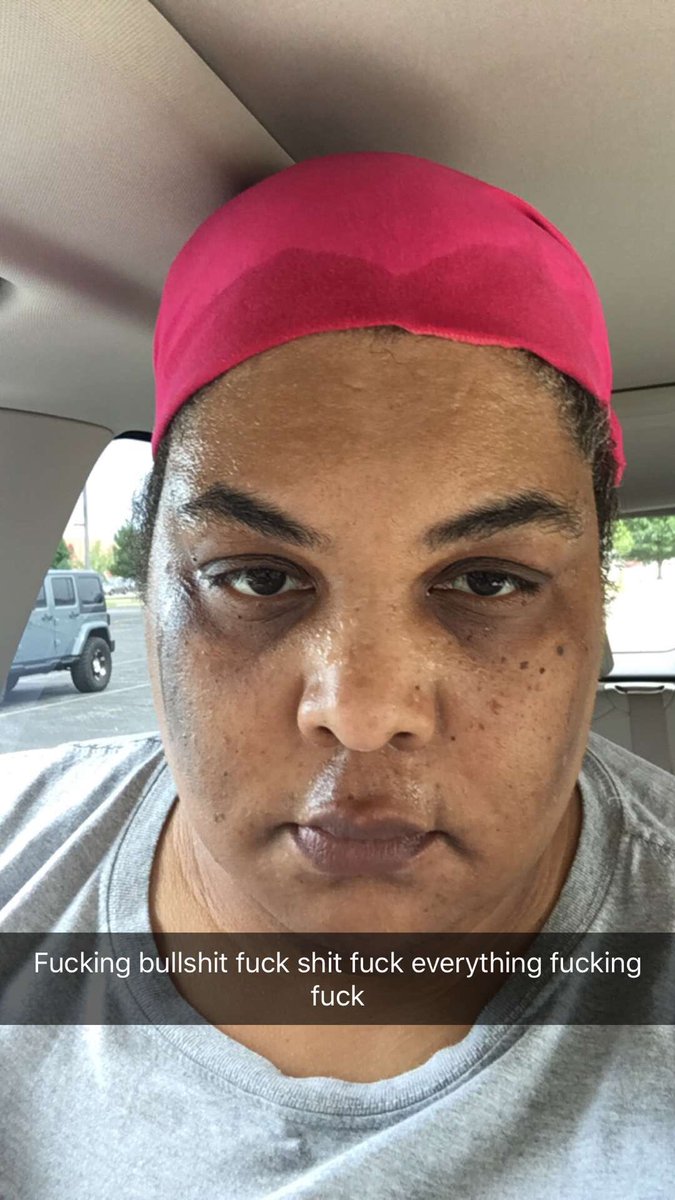
It can be very difficult to separate the art from the artist. In the case of Roseanne Barr and her critically acclaimed television show based on her life, it is nearly impossible. I wasn’t going to watch the reboot because I find Ms. Barr noxious, transphobic, racist and small-minded. Whatever charm and intelligence she brought to the first nine seasons of her show, a show I very much loved, are absolutely absent in her current persona, particularly as it manifests on Twitter. She is a supporter of Donald Trump, vocalizing her thoughts about making America great, claiming that with her vote, she was trying to shake things up. She tweets conspiracy theories, rails against feminism and shares Islamophobic opinions.

Continue reading →

So Sad At Harvard Law School

In our latest edition of “The Best and the Brightest,” the children of Harvard law remind us that even cowgirls get the blues.

Every law student has met a lawyer who cannot help but offer the advice, “Don’t go to law school.” The misery in the legal profession is seemingly ubiquitous. The mental health crisis facing modern lawyers has been reported so extensively, it barely needs repetition. Yet the causes have been woefully overlooked.

Between the first sentence, which includes a quote that I’ve uttered regularly, and the second is a huge gap these future leaders of America have boldly leaped over. It’s almost as if they lack the capacity to grasp what they did, which might be chalked up to question-begging except for the fact that smart kids would never engage in such an obvious logical fallacy.

When lawyers tell kids “don’t go to law school,” there is a list of reasons. Law is no longer a respected profession. Law no longer assures a practitioner of a comfortable financial future. Continue reading →

The Whorls Of Justice

Sure, a few prosecutors still want to argue over bite mark evidence, in bizarre denial of the conclusive science that it’s forensic nonsense. Their reason is understandable. It enables convictions where the evidence otherwise would fail. And if they believe they’ve got the right defendant, the bad dude, why wouldn’t they want to use whatever they can get away with to convict? That it might not be legit, or the defendant might not be guilty, isn’t their concern.

But historically reliable evidence is entirely different in the minds of jurors. Television shows make it all appear so serious, so legitimate, so very conclusive, that we take comfort knowing that science is there to convict the guilty and acquit the innocent. We don’t quite get how it works, but if trusted scientists say it’s the real deal, we are thrilled to believe. It’s one less fear to check off the list, the fear of wrongful conviction.

Except when it isn’t. Continue reading →

In Memoriam: Judge Stephen Reinhardt, 1931-2018

Ninth Circuit Judge Stephen Reinhardt passed yesterday afternoon. Whether you agreed with his perspective or not, he was a principled and brilliant judge.

Reinhardt, an appointee of former President Carter, was dubbed the “liberal lion” of the federal circuit courts.

His rulings in favor of criminal defendants, minorities and immigrants were often overturned by the more conservative U.S. Supreme Court.

And his opinions were, occasionally, reversed. Continue reading →

When Due Process Is Measured By A Judge’s Values

He was a student at the University of Maryland, “was” being the operative word. Whether this John Doe did anything blameworthy to begin with is a matter of values.

On the evening of December 14, 2014, Plaintiff John Doe, Jane Roe, and several of Doe’s friends, identified as “K.P” and “A.S.,” left a College Park, Maryland bar for K.P. and A.S.’s on-campus apartment. Once at the apartment, Roe grew tired and fell asleep in K.P.’s bedroom. K.P. initially joined Roe in his bed, but later complained that he could not get physically comfortable. K.P. left the bedroom and suggested to Doe, who was resting on K.P.’s couch, that Doe instead sleep in the bed with Roe, and K.P. would sleep on the couch.

To be clear, there is nothing here to suggest that Jane Roe was incapacitated. She had been drinking, but intoxication is not incapacitation. Nor is being sleepy. Continue reading →

Short Take: Deaf Can’t Be Helped

Magdiel Sanchez was killed because he was deaf.

Sanchez wasn’t disobeying commands. One can’t disobey what one doesn’t know. One can’t know when one can’t hear. You can’t blame a deaf man for being deaf, but they killed him for it anyway.

The killer was Oklahoma City Sgt. Christopher Barnes. He won’t be charged.

Oklahoma County District Attorney David Prater said his investigation determined the Sept. 19 shooting death of 35-year-old Magdiel Sanchez outside his south Oklahoma City home was justified.

Continue reading →

Cheap Lawyers, No License

It’s an interesting notion that relies on one god-awful assumption.

“Our key premise is that consumers aren’t stupid,” [Stanford Graduate School of Business professor Jonathan Berk] says. “Put yourself in the situation: If you know there are charlatans in a certain field, but you don’t know who they are, you’re not going to pay as much, right? Whatever the odds of getting an incompetent provider are, prices will be forced down to a level at which you’re willing to take that chance.”

That’s a heck of a key premise, particularly when the contention is that people should be willing to bet their lives on it. The argument is that licensing serves the interests of protecting the providers of licensed services more than the consumer. Continue reading →

Census And Consensus

Among the vast array of things that evoke knee-jerk antagonism these days, few seem to be more curiously volatile than issues relating to undocumented immigrants. I say “curious” because few cared a whit about them until Trump became president, ignoring the hundreds of thousands of deportations under Obama because, well, who cared?

So when it was announced that there might be a question on the 2020 decennial census, as required by Article I, Section 2 of the Constitution, cries of outrage rang out. It’s not that the question of immigrant status hasn’t appeared on the census in the past in various forms. It has, and without controversy. But this time is different, as the tenor of the issue has changed substantially.

Much as the Trump administration, by Commerce Secretary Wilbur Ross, has tried to provide benign reasons for asking about citizenship, people aren’t buying. How could they, after Trump ran on vilifying “illegals”? The contention that this won’t impact people’s willingness to respond to the census questionnaire seems ludicrous.

Whether rightly or wrongly, there is massive concern, if not outright fear, that the nice folks from ICE will take away grandma and lock the children up in kiddie prison. That the census must, by law, be kept confidential is of little comfort. There is no trust in this government, with good reason. Continue reading →