Houston criminal defense lawyer Mark Bennett raised the point that criminal defense lawyers are, for all practical purposes, immune from legal malpractice. Rick Casey at the Houston Chronicle , who isn’t snarky at all, wrote:
Criminal defense attorneys will tell you that the most important question to ask a potential client is not whether he is innocent or guilty.
It’s how much money does he have.
Casey tells the story of a screw up by a defense lawyer, who pleads his client guilty to a crime for which the evidence sucks, but a subsequent civil action for legal malpractice is dropped because the lawyer has no malpractice insurance. You can’t get blood from a rock explains it. Casey notes that the state bar voted down a requirement that lawyers disclose whether they have malpractice insurance. But he then notes:
The Supreme Court ruled that anyone convicted of a crime couldn’t sue their attorney, no matter how bad the representation, until they had their conviction overturned. It would, the court said, be bad public policy to allow criminals to shift the consequence of their crime to their lawyers.
Hence, lawyers are coddled. He’s got a point. But there’s a flip side to the point, as Bennett notes:
But the more I chewed on the idea, the more it seemed that that rule would do more harm than good.
First, anyone who gets mail from prison knows that incarcerated people have way too much free time on their hands. Also, incarcerated people are often unhappy with their lot. Allowing prisoners’ civil claims that their lawyers’ negligence lengthened their sentences to survive summary judgment would create a boom in prison litigation, would tie up lots of criminal defense lawyers (especially those representing the indigent, whose problems are often too deep for any successful defense) in fighting meritless claims, and would drive good and non-negligent lawyers out of the practice of criminal law.
But that’s the argument from the lawyer’s point of view, which Rick Casey might call the “coddle us” argument.
Bennett’s got a point too. There’s no doubt that people in prison would keep those idle hands occupied with making claims against lawyers. Heck, federal courts are already jammed with actions over tasteless food and bad haircuts. Imagine what would happen if there was potential money to be made.
The situation lays out that Casey is right, that we’re a coddled bunch, but Bennett is right that Casey’s solution would bring the system to a grinding halt and make it untenable to defend, a worse problem in that those in need of defense would be denied one by lawyers whose every waking moment was spent addressing spurious claims of malpractice.
Prepare for a big unpleasant leap here. The problem is largely one of our own creation. Not only do lawyers too often fail to perform satisfactorily, engage in the diligent effort to represent their clients by either “ordinary injustice” or a deeper concern for the fee than the work, but then hide from the outcome of these failures. Not every lawyer by any stretch, and not in every case. But it happens, and it happens far more than it should.
Criminal defense is more art than science. To do the job properly often requires more time than is available. Lawyers who want desperately to believe that they don’t suck argue that they somehow manage to do a great job defending a hundred defendants a day. They aren’t fooling anyone. The problem is that no one wants to be the bad guy and call them out. Judges don’t want to do it. Other lawyers don’t want to do it. Nobody wants to be labeled “mean” and disloyal amongst friends and peers. We may shake our heads when we see it, but we do nothing about it.
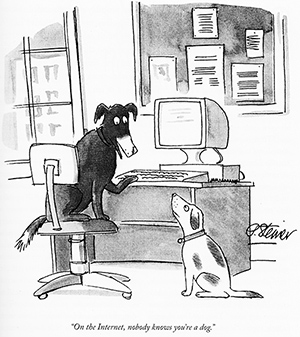
The likelihood of this changing strikes me as nil. While criminal defense lawyers portray themselves as gladiators, they’re more like lemmings with low self-esteem. If there’s any doubt, consider the laboratory of the internet, where lawyers will ingratiate themselves with any fool who twits, laying aside any potential for thought or belief to be loved by children, losers and idiots. It’s inconceivable that anyone disagree on the internet, lest they become a pariah amongst people whose thoughts are fully expressed in 140 characters. Perhaps nothing that exists has better demonstrated the verity of Sir Joshua Reynolds’ quote.
The best solution to Rick Casey’s problem comes from ourselves. As criminal defense lawyers, we are responsible for providing our clients with the best possible defense. It’s not dependant on how it comports with out personal sense of justice, as children would think, or with the transitory Code of Professional Responsibility. It’s not about the money. If you have an issue, don’t take the case. But once you take it, do it right.
Such a statement, of course, is too simplistic. Even with best efforts, we do things wrong. We’re not perfect, and given that most of what we do is fraught with variables beyond our knowledge and control, we are bound to make mistakes. Mistakes are not a product of incompetence, but of the difficulty of the job and our limitations as human beings. Stercus accidit. Get used to it and be (hu)man enough to accept it.
The mistake is a problem, but not the most significant problem. The one that undermines our integrity, and gives rise to Rick Casey’s complaint, is our inability to admit our error and correct it. Rather than concede error, lawyers try to bury it. The deniers and apologists will proclaim that this doesn’t happen, that we’re just the most wonderful thing since sliced bread. Other lawyers will applaud them for being so bold. We love it when our peers back us up in our failures. I’m okay. You’re okay. Be happy. No worries. Nobody is every bad, or wrong, or stupid, or screws up, as long as you will love me for supporting you.
Tell it to the guy sitting in a prison cell because you blew it. No doubt he’ll care deeply about not hurting your feelings. It’s probably the most important thing in his life, the one he spends in prison because you screwed up. But as long as some relatively anonymous 12 year old on twitter tells you that you’re the cat’s meow, everything is just hunky-dory. Your mistake doesn’t go away because somebody you don’t know twits that she thinks you did just fine.
In the good old days, lawyers without the guts to admit their mistake would put their back against the wall and argue that they were right, right, right, stamping their feet before they ran out of the building. Today, they just twit about how some mean, nasty person said they did something wrong called them a bad name. A dozen, maybe a hundred, pseudo-anonymous lawyers will comfort them.
Rick Casey’s issue is real, and it’s getting worse rather than better. It was a problem before, and is more of a problem today. We are coddled, and we coddle ourselves. No amount of lip service paid to the defendant we failed, who sits in a prison cell while lawyers ingratiate themselves with others to get more twitter love, cares how many followers we have. This mutual admiration society with people we don’t even know is not a substitute for having the guts to own up to mistakes so that human beings don’t spend a second longer suffering for them than they should.
The answer isn’t disclosing whether we possess malpractice insurance. The answer is being a real criminal defense lawyer, warts and all, rather than just pretending to be one for the benefit of being part of the gang. Do the hard work that minimizes the potential for mistakes. But when a screw-up happens, as it invariably will, make it right.
And to all of you who encourage everything from incompetence to concealment so that you will be loved on the internet, enough. This sucking up to idiots to get another twitter follower, and bolstering failure and ignorance in the process, will be the ruin of us.