Author Archives: SHG

Measuring Success: What’s a Lawprof to do? (Update)

Brooks Holland, formerly a Bronx public defender and now Lawprof at Gonzaga Law School, posed a question over at PrawfsBlawg :

With the start of the new school year, I’ve seen a lot of interesting a valuable discussion about teaching methods, such as whether to use the Socratic method or Power Point, or whether to ban or limit laptops in class. What I sometimes wonder most, though, as a relatively new teacher with no formal training in education, is how I should measure my success at achieving my ultimate goal: student learning … which of course is itself a loaded concept, since from what I can tell different law professors prioritize different things to be learned: doctrine, theory, critical thinking skills, professionalism, and so on. But whatever I want my students to learn, how should I measure my success at getting students to learn it through whatever methods I’ve chosen?

I can appreciate Brooks’ focus on student learning, as opposed to so many lawprofs’ concern for how many articles and how prestigious the law review in which they’re published.  It’s refreshing to have someone more concerned for the students than themself.

But it smells like Brooks may be looking for love in all the wrong places. 


The standard answer I have received to my question is student evals. And, my student evals have aided me tremendously in refining my teaching methods—I’m always impressed with how seriously some students take this opportunity to voice their opinion about their education. But I see some limitations to student evals, too.

Some students don’t complete the evals or take them as seriously as others, which leaves me with no idea of whether I’ve reached these students. Additionally, our evals, like many of the evals I remember completing as a student, ask pretty general questions like: “What has the professor done especially well?”, “What should the professor do to improve the teaching of this course?”, and “General comments.”

Well, duh.  Student evaluations are the last place you’re going to get the sort of feedback you need.  Students judge professors like a beauty pageant.  If they like the lawprof, the eval is good.  If they hate the lawprof, the eval is bad.  But students lack any basis to judge whether the lawprof is effective, and they won’t know what they’re talking about for at least another 5 years.  Students know squat.  That’s why they’re the students.

While Brooks writes that he does engage in a bit o’ the Socratic Method, but it’s not clear why:


And, to return to the topic of “Socratic” teaching, I regularly question my students in class not only to give them a chance to work through legal problems with me before I test them, but also so they can show me through their responses what they’re getting out of the class.

It seems to me that Brooks hasn’t been away from the courtroom that long that he doesn’t remember how judges can put the screws to a lawyer.  So what’s the point of using the Socratic Method if he’s not going to put the screws to his students?  Will the judge give them the “chance” to work through legal problems when their defendant is looking at 25 to life? 

But Brooks seems to have a handle on things when he writes that students can show him “through their responses what they’re getting out of the class.”  If they can stand up and take the heat, face the lawprof and make a cogent argument, then he’s getting through to them. 

So how does a lawprof determine whether he’s successful at his primary function?  Make them think and act like lawyers.  If they can’t, something is wrong.  And if they like you too much when the fill out the student evaluations, you’ve really blown it.  They shouldn’t appreciate you until they’ve logged some time as real lawyers, when they will first understand what being a lawyer really means.

Anybody can learn conlaw.  Not everybody can stand up and take a punch in the gut.  Hey Brooks, you put in your time standing in the well in the Bronx.  Your job is to teach them to do it too. 

Update:  And for the law students wondering what to do when the lawprof puts the screws to them, Orin Kerr’s got an answer:  I dunno.  Clients just love it when they’re facing life and the best their lawyer can come up with is “I dunno.”  Honesty trumps competence every time.  I swear.
Feige’s “Raising the Bar” to Air September 1st

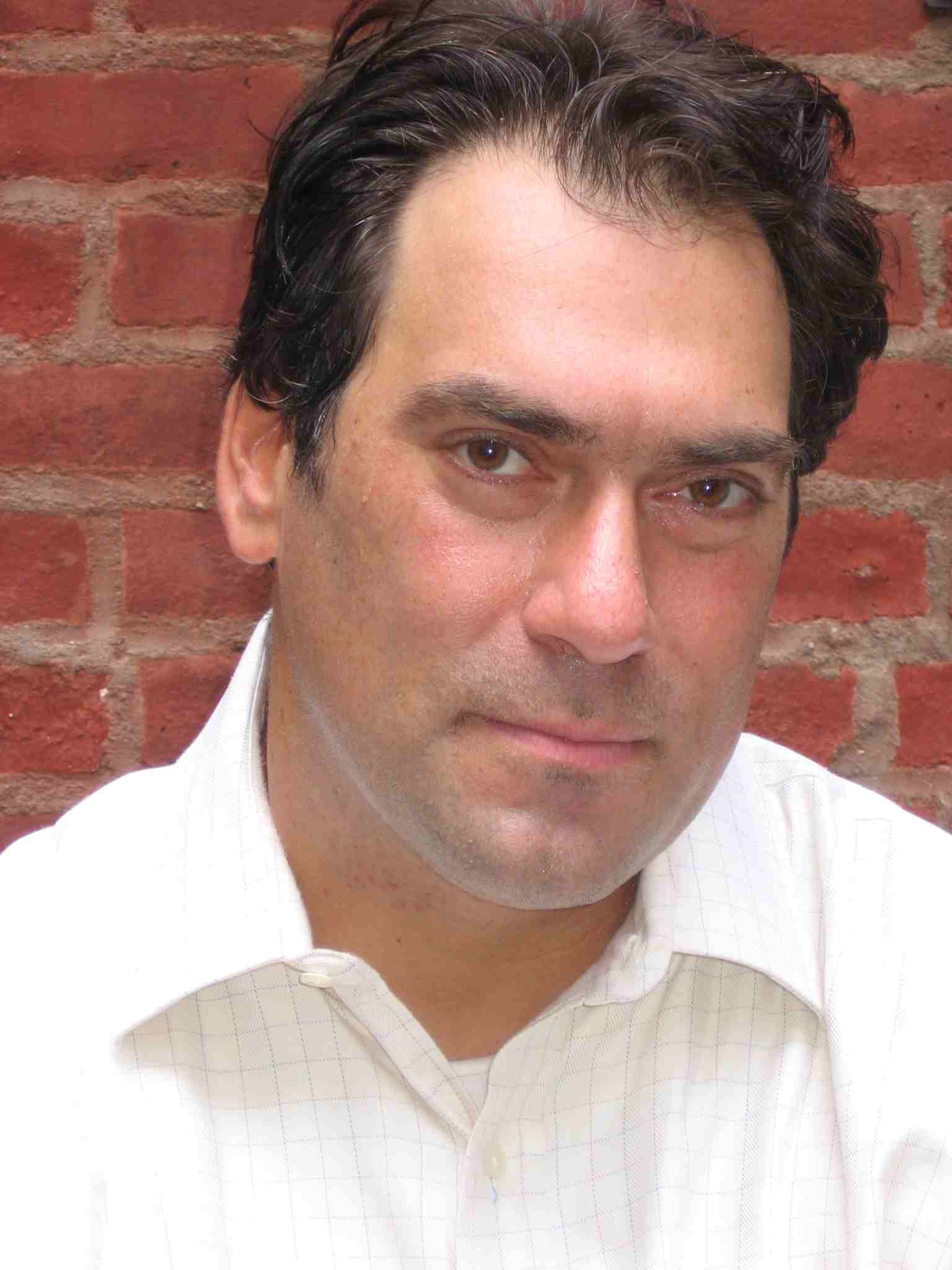
David Feige, former Bronx Defender, author of Indefensible,  occasional blawger is now a Hollywood wunderkind with his drama “Raising the Bar” coming to TNT on September 1st.

My PhotoThe show, produced by Steven Bochco, is a series about public defenders in the Bronx, in which David hopes to portray real public defenders.  From the ABA Journal interview:

What made you want to do the show?

I had been a public defender for a long time, and one of the things that became abundantly clear to me is that the mass media really have no clue why we do what we do. You’re constantly being portrayed as shambling, poorly dressed schlubs who don’t particularly like their cli­ents and basically just phone it in. It’s appalling.

So how will Raising the Bar be different than other legal dramas?

This show takes the perspective that the criminal justice system is bro­ken; it is really not this beautiful, perfect system populated by heroic, jut-jawed prosecutors getting bad guys. It’s a place where justice is rarely, but occasionally, done and it’s driven by politics. When it does hap­pen, it’s merely the con­ven­ient alliance of people’s self-interest. That’s a very unusual perspective, and it’s an important one.

Of course, a few concessions to television appear from the promo video :  Everyone is beautiful, they kiss some and there is dialogue like “somebody is trying to screw my client out of a fair trial,” said as if it’s shocking.
Nowhere in the promo does anyone whine, “But Juuuuuuuudddddgggggee…,”  probably the foremost legal argument used in the Bronx by both sides.

Whether this gets real or is just another lawyer genre show has yet to be seen, but I’m rooting for David and look forward to seeing whether they’ve captured the real flavor of being a public defender in the Bronx. 

H/T Skelly

CLTV 38: Film Noir Meets Wiggle Words

Kenneth Frank Patrick Lammers Junior has entered a new phase of production value, with dim lights, blurred hand motions and no corresponding movement of lips to speech.  I like it.  It could use a damsel in distress in a trench coat to flesh out the character development, but even so it was a moving experience.  This is the new CLTV 38 at CrimLaw.

Except for one thing.  I wasn’t all that excited about the plot.  Ken picked apart the distinction between “presumed innocence” and “actual innocence,” discussed here and at Grits here.  Ken begins by talking about the various levels of proof, starting with reasonably articulable suspicion and probable cause, and working his way up to preponderance of the evidence and ultimately beyond a reasonable doubt.  Ken notes, and I agree, that except for preponderance, the definitions of these various levels of proof defy meaningful explanation.

In other words, judges conclude that they either are or aren’t met, but can’t provide any reliable reason why.  It’s just another one of those things we make up in the law, and then pretend we know what it means but are forbidden from explaining it to regular people because it’s a trade secret.

Ken’s point in all this, as I understand it, is that while a defendant may be acquitted because the jury concludes that proof doesn’t meet the highest burden, beyond a reasonable doubt, it doesn’t mean that the proof didn’t meet the lower burdens.  Therefore, the defendant has been proven guilty, but just not enough to satisfy criminal liability.

Ken then goes after the language, “presumption of innocence,” attributing it to some ancient idea of a good way to express the notion that the defendant isn’t proven guilty until he’s proven guilty.  Ken prefers a construct along the lines of a blank check, nothing having been proven rather than a defendant presumed innocent.  This follows the fact that a defendant doesn’t go to trial until probable cause is proven.  While Ken concedes that probable cause is minimal, and easily met, at least it’s something.

The confusion, therefore, stems from some historical use of the “presumption of innocence” language rather than any actual belief that a defendant is innocent until proven guilty.

I have to disagree with Ken’s formulation.  By his theory, a defendant is a little guilty until proven really guilty, merely by dint of an accusation.  Probable cause adds nothing to the mix, serving only to put a stop to a prosecution if it’s so utterly lacking in any basis to proceed.  This it what Sol Wachtler spoke about when he said the prosecutor could indict a ham sandwich.  There’s no comfort in PC.

In fact, Ken’s formulation serves to highlight the basic problem.  You’re walking down the street, minding your own business, and suddenly jumped by your favorite SWAT team and tossed into the pen.  Pictures of some guy who looks like you just knocked off the Savings & Loan a block away.  Under Ken’s formulation, your either a little guilty or you have to prove your innocence.

Ken shifts the burden onto the defendant to prove “actual innocence,” something he concedes is nearly impossible except in DNA cases.  If you can’t do so, then you’re guilty, but just not guilty enough to meet the required burden.  So basically, once an accusation is leveled against you, you’re screwed, and the only question is whether it’s bad enough to send you to prison.

The presumption of innocence means something in my book.  It means what it says.  You are innocent.  You remain innocent.  And innocent means innocent.  The burden isn’t on the accused to prove he’s innocent.  The defendant should not be held to prove a negative.  Certainly the prosecution isn’t held to do so.  And this doesn’t change because someone, whether a cop, a spouse or a bank teller, claims otherwise.  An accusation means nothing.  It’s easy to accuse, particularly when it’s a crime for which no hard evidence exists, and it’s impossible to disprove.

Ken then proposes an interesting notion.  Why not have juries pick from three, rather than two, choices:  Guilty, not guilty or innocent.  At first blush, this doesn’t sound too crazy, right?

But it is.  It shifts the burden of proof from the prosecution to the defendant, where a verdict of innocent would require that the defendant prove “actual innocence” while the prosecution tries to prove guilt beyond a reasonable doubt.  Ken’s lightened the load a bit, suggesting that only 10 out of 12 jurors need agree on actual innocence.  It’s a kind thought, but still not enough.

And it suffers from yet another infirmity.  It is quite possible that a wholly innocent defendant be placed into a position of appearing more likely guilty than not (the preponderance standard), when an eyewitness identifies the defendant as the perpetrator of a crime that he simply did not do.  This is compelling evidence, even though it’s of dubious value given the frequency of false identifications and the problems inherent in eyewitness testimony.  But even when it may not be sufficient to meet the beyond a reasonable doubt standard, rarely would a jury reject it so completely as to conclude the defendant to be innocent.

The upshot is that a person is in law, and more importantly, in fact, innocent until that shroud of innocence is removed.  To allow otherwise is to conclude guilt based solely on accusation, and then shift the burden of innocence onto the defendant, regardless of whether guilt beyond a reasonable doubt is ever proven.

No Hallmark Cards For You!

Via Turley, a story that would be utterly laughable but for the first comment to his post.  It seems that Hallmark, the company that keeps inventing holidays and celebrations so that people have to buy more greeting cards lest others feel unloved, has brought a deluge of Evangelical feces upon itself by creating a line of cards for those inclined to care deeply for others of the same gender.  You can’t make this stuff up.

From MSNBC :

Most states don’t recognize gay marriage — but now Hallmark does.

The nation’s largest greeting card company is rolling out same-sex wedding cards — featuring two tuxedos, overlapping hearts or intertwined flowers, with best wishes inside. “Two hearts. One promise,” one says.

The American Family Association is outraged:


Ask them to stop promoting a lifestyle that is not only unhealthy, but is also illegal in 48 states.

Hallmark Greeting Cards has announced it will begin selling same-sex wedding cards, even though same-sex marriage is legal in only two states. The purpose, they say, is to satisfy consumer demand. It appears that their purpose is also to push same-sex marriage. Last year Hallmark began offering “coming out” cards – as in “coming out of the closet” — a euphemism for announcing homosexuality.


Normally, this would be one of those goofy stories about goofy people who are so threatened by anyone or anything that doesn’t comport with their need to control the perceived “morality” of others that they are ready to go to war in the name of religious fervor.  I mean, seriously, this would be a knee-slapper because it’s just so silly.

But my dismissive attitude would be sheer arrogance, since I refuse to realize that there really are people out there who actually believe that this is an issue.  The first comment to Turley’s post struck a nerve:


Thank God our local store pulled them after a rash of complaints.

The store(s) is(are) also looking at carrying a different brand. 

This has been going on for a period of time and this “in the face” insult was the last straw with a lot of consumers. 

Hallmark, now run by a small bunch of ultra liberals, will find out you don’t continually insult 90% of your market without losing sales.

These Hallmark novices will find out the hard way that running a company while dependent on 4% of America as your customer base won’t work.

The point isn’t whether the numbers are accurate.  Clearly they aren’t.  The point is that there are people who truly believe this to be the case.  Subsequent comments attempt to challenge the point by rational stories, challenges to latent sexuality issues and the like, but they are ineffective because the first comment, written by Martha, reflects a certainty that cannot be shaken.  Martha can take comfort in knowing that this is a matter of absolute morality.  She is right, and everyone who disagrees is an ultra-lib, proving her righteousness. 

In the past, most notably with the civil rights movement which compares well with discrimination against homosexuality, lawmakers expected time to wear down the in-bred bigotry to some extent, with exposure to people who are “different” to ultimately prove to those inclined to hatred that we are all human beings worthy of dignity and respect.  I’ve been waiting since 1964 for this to flesh out.  It’s better, but there’s a long way to go.

To those who find it inconceivable that anyone else would care that much about how two other people relate to each other, consider this:  As we struggle to overcome the debacle of the past 8 years, brought upon us by a voting block of very substantial magnitude, largely driven by religious leaders who have the power, and the will, to push their flock to act upon their moral outrage in a war to impose their righteousness upon others, they are still alive.  They are still out there.  They are still a menace to rational society.

Perhaps, 100 years from now there will be broader acceptance of some diversity, maybe even a grudging tolerance.  Why they care so much may never be clear to those of us who don’t, but this is so firmly planted that it’s not going to be easily uprooted. 

In the meantime, our presidential candidates met with a religious leader with a very large church to answer his questions, to appeal to his flock.  Think about the ramifications of this, presidential candidates answered the call of the Mullah to seek his approval.

I think this Hallmark situation is absurd.  But I can’t think of it as funny. 

Begging for a Crash

David Giacalone at f/k/a posts about the newest, most high-techiest thing to hit the highways, the in-car hotspot.


San Jose University business professor Randall Stross raises an important warning in today’s New York Times, with a column titled “Caution: Driver May Be Surfing the Web” (Aug. 24, 2008). You see, Chrysler is about to make its 2009 model cars into internet hot-spots, capable of accessing the web while you enjoy your “living room on wheels” — with a feature it calls UConnect Web.

Now if Chrysler could similarly invent a way that automobiles would drive themselves without need for human attention, this would be brilliant.  Alas, they haven’t, and people will still be required to press pedals and turn wheels to make cars go where they should.  This is a problem.

People can’t drive worth a lick now.  Between cellphones, selfishness and utter carelessness, the road has become a dangerous place.  Sure, we need it and elect to take the risk in order to get where we’re going, but we do so at some significant personal risk.  Each of us figures that while the other driver is a menace, we are cautious and can manage to navigate our way around the bad drivers and arrive safely.  No one ever sees themselves as the bad driver.  It’s always the other person. 

It’s not that vehicular hotspots won’t have their legitimate uses.  For the businessperson who can access the internet from her car while safely parked, it could be a huge boon.  But we know from some experience, ranging from those who have so much to say that it can’t possibly wait until their are stationary, or better yet home, to speak at enormously great length on the cellphone, to those who are enslaved by the crackberry between their legs, twiddling with their thumbs in a gestures that used to get people arrested for public indecency, that people will use this technology while guiding a 5,000 pound missile over pavement at 73 miles per hour.  They just will.

The problem could be resolved by an interlock system that shut off access while a vehicle was in motion, but that would deny junior the ability to cruise porn sites in the back seat and thus keep him quiet for the duration of the trip.  As any modern parent knows, there is no interest as grave as keeping junior pacified while on the road.  If not, the parent might have to speak with the children.  This violates the parental rules of engagement.

But the genius of auto hotspots doesn’t end there.  Consider this:


PCMag.com reports that “the hotspot range will extend approximately 50 feet from the vehicle in all directions, and will combine both WiFi and 3G cellular connectivity.” That means we can also expect tailgaters (and SideGaters?) cruising close to steal the WiFi signal from a moving Chrysler, Dodge or Jeep vehicle.

That’s the best part.  You don’t have to actually own one of those disgusting Chryslers to enjoy the benefits.  You need only cruise behind or aside one to steal the signal.  Can’t you envision people jockeying for position to get aside that Jeep, or nosing your Mercedes between it and the tail-gating Chevy.  Regardless of how well the Chrysler’s driver handles web access, you now need to concern yourself with all other marques “signal-searching” in the fast lane.

If an automobile manufacturer announced that it would hereinafter produce vehicles with windshields that would be completely black for 10 seconds out of every minutes of driving (why would they do that?  How about the tagline, “Bring some challenge back to the road!”), they would be viewed as insane and castigated by at least 60% of the driving public.  But when they accomplish the same thing, but give us that techno-fix that has become our lifeblood, we embrace it as a marvel.

The irony is that groups like MADD, who have so effectively eviscerated a panoply of rights and interests in the name of protecting a relatively small group of potential victims, will do nothing about a novelty like this that will impact far more people than drunk drivers.  It’s not that I’m advocating for people to drive drunk, but for a rational appreciation of proportionality.  Will it be better if 50,000 die in hotspot-related crashes, without a word of protest, while they focus on the 5,000 people injured annually in drunk-driving related incidents?

As far as I can see, there’s little interest in safety on the road, aside from the Myopic Mothers.  Except David Giacalone.  And me.

Can 51% of Americans be Wrong?

Following within second of the breaking news that hair-challenged Joe Biden will be the Democratic nominee for Vice-President, the pollsters got into gear.  As I watched Fox news pundits discuss the polls yesterday, most of which was fairly humorous as it was spun in a way that assured negativity, Chris Wallace said one thing that wasn’t funny at all.

According to a poll discussed by Wallace, 51% of Americans polled had never heard of Joe Biden. 

Sure, most people have no clue who their senators are, or could name their congressman.  They can’t tell you the capital of Delaware or name a single Supreme Court Justice.  Tales of American political and governmental ignorance are legion. This doesn’t mean that they don’t have an opinion about everything, usually relying on their belief that their “common sense” trumps the need for knowledge.

But as we come into the thick of the presidential campaign, with both parties putting on the big show to grab the patriotic hearts of Americans with swirls of color, sounds of fury and lots of balloons, those of us who pay a modicum of attention need to remember something:  they’re playing to idiots.

As recently discussed, the “undecided” vote doesn’t reflect those who are ideologically open-minded, but those who are politically ambivalent because they just don’t get it or care enough to be bothered.  They just aren’t that interested.  Let’s call this group the “lowest common denominator” (LDC)of American politics. 

For those of us who are interested in our government, say enough to not only know who Joe Biden is (after almost 36 years in the United States Senate) but perhaps have some feelings about him, we already possess a fairly well-developed ideological perspective.  We may not care much for either party, but it’s not for lack of knowing. 

But the LDC rules.  This is a product of both our electoral system as well as sheer numbers.  There are far more people who are disinterested than not, and while those who pay attention may vote, contribute and work for the candidate of their choice, the LDC elects the winner. 

It’s not that the LDC doesn’t care about the economy, or the war in Iraq, or abortion.  Indeed, they often care deeply about individual issues.  But they lack the ability to comprehend complexity, and see issues as black or white.  This is the mindset that allows them to simultaneously hold positions that result in a direct conflict, such as the economy and the war in Iraq, without any appreciation of the impact of paying for a war that they insist must be “won” while complaining bitterly about the cost of gas at the pump.  No one is going to make them confront their dissonance, and there’s nothing cognitive about it.

The concept of democracy is a wonderful thing, or so we’re told.  The majority rules and those who disagree must give way to their will.  The candidates get this, as much as it makes me ill to listen to them spout foolishness to pander to the LDC.  Lack of a plan to address a pressing issue doesn’t seem to get in the way of chest-thumping, heart-warming rhetoric.  And the more disenchanted one gets with a candidate’s vapid pronouncements, the more out-of-touch we become with American politics.

When Chris Wallace related the 51% figure, he commented that this should bring humility to media pundits who have had Joe Biden as a regular guest on their Sunday morning shows.  While some of us pay attention to positions and critique strategy, the LDC will be sitting back in their lazy boy recliner watching cartoons and waiting for someone to appeal to their “common sense.”  And the rest of us will live with their decision, no matter what we think.

Democracy is a great concept, with one flaw.  It requires a knowledgeable electorate.  And no one can force knowledge upon the American people.  It’s their right.

Will “Tough on Crime” Still be the Only Choice?

This is not intended as a partisan assessment, but rather one based on the hard reality that when it comes to criminal law issues, neither major party is willing to give up the appeal of being “tough on crime” to suck votes out of that vast group of “undecided” voters. 

The rhetoric from the presidential candidates has offered little beyond crass appeal, to the point where there is no honest perspective that can believe that they aren’t pandering for votes despite whatever beliefs they may personally hold.  What else is new?

But the choice of Joe Biden as the Democratic VP candidate is different.  With 36 years in the Senate, he has a long track record on criminal justice issues.  While Barak Obama can say anything (or nothing) about his position on crime and punishment, Biden comes with baggage.  What does this mean?

Doug Berman has begun to explore this issue, as has Jeralyn at TalkLeft.  Jeralyn has already laid her cards on the table:

So there you have it. Obama and Biden are going to run a tired, decades-old but tried and true “tough on crime” campaign. I expected it with Obama, as his views on crime were never particularly progressive, but now with Biden, it’s enshrined in cement.

I understand and appreciate that not all voters — and not even all readers of this site — agree with me that America, Prison Nation, is one of the worst failures of our Government and our democracy. It’s regressive and an embarrassment.

Since exposing injustices is the reason this site exists, you can hardly expect me to cheer for this duo. In 2004, I said I wouldn’t vote for Joe Biden as dog-catcher.

There is some tinge, perhaps, that this harsh assessment has its roots in bitterness over Hillary, but writing that she wouldn’t vote for Biden as dog-catcher is a very strong statement.  Is the man that evil?  Doug found this position to be over-the-top as well:


I found these comments from Jeralyn a bit jarring now because Jeralyn has not consistently criticize the Clintons on this front, and because Senator Biden strikes me as just playing the old Clintonian “let’s not be accused of being soft” game in the arena of crime and punishment.  Still, I think Jeralyn is right to lament that the crime and punishment arena is just another in which Senator Biden does not represent a new kind of politics.

What remains clear in this election is that there is no perceived majority of American voters prepared to put aside their blood-lust for retributive justice in favor of “smart on crime.”  The best we can hope for is a platform of “we’re a little less harsh than the other guys,” hardly something to get all worked up about.

To many, this position is not only understandable, but quite acceptable.  The argument that someone first has to get elected, and should thus be freed from speaking the truth and given full authority to pander, is just the way the game of politics is played.  A wag might question how this squares with “a new kind of politics,” but the true believer can forgive anything.

There are many other issues on the table this election, from economy to Iraq, and the perpetual “moral” issues that divide this country between those who want to be left alone and those who want to impose their moral values on the heathens.  And the flip-side of a harsh position like Jeralyn’s is whether this hatred for Biden means that four more years of Republican rule would be preferable.

As Doug points out, Biden has done some decent things in the Senate on criminal justice issues, ranging from the Second Chance Act and the Justice Integrity Act.  Nothing earth-shattering, but better than nothing.  Of course, he also voted for the USA Patriot Act, but he voted against the disgraceful expanded FISA bill that gave immunity to the telecoms, though he signed on as an author of the original FISA bill in 1978.

The Daily Kos has taken a more optimistic view of Biden’s record on civil liberty.  This view appears unduly rosy and ignores much of Biden’s history in favor of a few sound-bites that are standard fare in politics.

Bottom line is that I agree with Doug’s assessment that Biden will play the Clintonian game of not appearing soft because that’s what gets people elected in America.  Obama is already well down the road on this one, having long since made clear that his “new kind of politics” is old-style “tough on crime” pandering. 

On the civil liberties front, don’t expect much this time around.  Apparently, the polls show that America isn’t yet ready for the Constitution.

Computer Forensics Expert as Private Investigator

The public hears the words “private investigator” and sees the image of Magnum, P.I., cruising in his Ferrari 308 GTS around the beautiful island of Oahu.  PIs know things that others don’t.  They find things out that others can’t.  They are glamorous and cool, and they get the evidence that frees innocent people.  Jim Rockford was not as cool, but lived in a trailer in Malibu.  As if they had trailers in Malibu. 

For criminal defense lawyers, private investigators are another matter entirely.  While they serve a critical need in investigations, most are former cops who hang out a shingle after they take their pension.  They use databases more than trench coats, and often have a hard time getting a decent statement out of the witness because, well, they are still cops in the heads.  They are expensive and produce relatively little useful evidence.  More often than not, they come up empty.

There are very expensive corporate-type PI firms that are used by corporations to do things like background checking and locating.  They use the same databases as the others, and these databases are available to lawyers as well if you want to pay for them, but they charge multiples of what small and solo PIs charge.   They provide no more information, but put it into very nice covers that make you feel that they’re more professional.  They aren’t.  They just don’t sound like cops when you speak with them, which is reassuring but otherwise meaningless. 

I’ve used some PIs who have access to information that they can’t possibly have.  Legally.  These guys produce some very cool stuff.  Unfortunately, these guys are not readily available to lawyers, and they are totally unavailable to the general public.  I would tell you where to find them, but then they would have to kill me.  And you too.  And they could find you.  They are that good.

Defendants are always asking for private investigators.  When they find out what it costs to get extremely modest returns, they usually demur.  Clients expect magic.  They get papers.  Often papers that are little better than what can be found in a well-framed Google search.

But there is a niche within the private investigator function that combines the skills of an true expert with the investigative aspect of the PI.  This niche is becoming increasingly critical in criminal defense due to the fact that technology has become a mother-lode of evidence for the prosecution.  They may not drink black coffee all night while sitting in the darkened front seat of a non-descript sedan, but they have the competency to get the evidence the defense needs.  This is the digital/computer forensics expert.

Larry Daniel from down in Raleigh has started a blog called Ex Forensis.  Some of his posts are quite technical, well over the head of simple country lawyer like me.  But then, that’s why we need a digital forensics expert like Larry to do his voodoo.  One of the drawbacks for Larry is that he won’t post about his cases for purpose of confidentiality, which means that he keeps the really good stories to himself and is resigned to posting hypos to explain what he does and what computer forensics offers.  Still, if you haven’t considered having a computer forensics expert on your side in a kiddie porn or cellphone case, while the government’s got what appears to be an overwhelming and indisputable case against the defendant, you’re walking in blind.

Larry bemoans the changing status of the computer forensics guy from basic expert to private investigator, meaning that states are now requiring forensics experts to be licensed like PIs.  He notes that the licensing requirements may well work against the forensics expert, since they are geared toward the trench coat gang.  On the other hand, it has the strange result in qualifying a forensics expert to do surveillance and the ex-cop to pretend to be a forensics expert.


So the catch 22 is, if I can qualify for a PI license based on my computer forensics experience, the board is potentially unleashing someone with no PI type experience on the public to perform services for which I know I am not qualified.

If a private investigator can perform forensics without any training or experience, then the licensing board is potentially unleashing an equally unqualified person on the public to perform scientific analysis of computer data.

While both the PI and the computer forensics expert are both “investigators” in the broader meaning of the word, don’t let this melding of two completely different skillsets confuse you.  Only the government can get away with putting totally unqualified witnesses on the stand to provide absolutely nonsensical “expert” testimony.  You will be required to have an actual expert. 

Most regular PIs I know will happily lie through their teeth about their ability to perform expert services in forensics, even thought they don’t have the slightest clue what they’re doing.  Business is tough for them too, and they won’t pass up a fee.

Larry proposes that computer forensics experts be separately licensed based upon qualifying examinations, which seems to be a sound position.  Of course, the problem is that there are many areas of technological expertise, far more than the government has time (or inclination) to address individually.  While there are professional associations that can offer some direction, there are those who will join that lack the requisite expertise and still have the imprimatur of being a member of a professional association.

So while the government may want to provide some comfort via licensing, and there are similarities in the services provided, beware the difference between expertise in a specific technical field and some ex-cops with a DBT account.  They are not fungible, and when you are in need of some serious digital forensics investigation, make sure you understand what’s available out there and that you’ve retained someone who really has the goods. 

When you need someone to do regular PI work, you’re on your own.

Homestyle Custodial Interrogation

Both Mike at C&F and Eugene at VC have posted about Judge Bybee’s 9th Circuit decision in United States v. Craighead.  It’s possible that Mike and Eugene are the same person, by the way, as they have never been seen together.

This is the case where the court held that an interrogation within the defendant’s home, while other agents are executing a search warrant, can be a custodial interrogation for Miranda purposes.  The challenge in this case was that since the defendant was being questioned within his own home, it could not be custodial and therefore warnings were not required.  The Court disagreed and held that a custodial interrogation can be had within the defendant’s home.

There has been lots of discussion about the primacy of a home and the special protections conferred on it by the Constitution and the courts.  Gene goes through the first five amendments in particular, although why he ignored the 9th is beyond me. 

I prefer a different approach (naturally) to the problem, foreshadowed by the comment by Kipesquire to Mike’s post.  The Constitution protects people, not places.  Normal people are intimidated by the police.  They are intimidated by them on the street and in their car.  There is nothing more intimidating that having the police break down your door (figuratively or literally) and enter your home without your legitimate permission.  The very notion that the fact that an interrogation happens inside the home somehow vitiates the intimidation factor is bizarre.  This is the real estate version of rape.

Caselaw has created a sanitized series of rules that pretend that people have the opportunity to exercise free will when confronted by a bunch of cops in riot gear with automatic weapons.  They are screaming at you to get on the ground while pointing their muzzles at your children’s heads, with you knowing that there’s a 50/50 chance that they will beat you, kick you and stomp on your head within seconds of your assuming a prone position.  If you are lucky, you will not require stitches, a cast or a funeral. 

It doesn’t really matter where this happens.  Do appellate judges have any doubt about this?  The cops don’t have to administer a good beating in every instance.  Just enough times to serve as a clear warning to anyone who has the audacity to not move fast enough that they can and will turn them into human pulp if necessary.  This message has been delivered.  There is no sentient being in American society who hasn’t figured out that they have the guns, tasers, batons and boots sufficient to do the job.

The phrase “submission to the shield” is used to express the tendency of citizens to comply with police against their will.  The law requires that a waiver of rights be knowing, intelligent and voluntary.  There has never been such a waiver.  At minimum, it fails the “intelligent” prong.  But more importantly, how can anything be voluntary when the threat of massive physical harm is omnipresent.

Ah, but the judge responds that the police did not beat the defendant.  He collapsed unscathed.  So the apparent answer is that a defendant must refuse to submit, suffer the harm ranging from a damn good beating to death, and then assert his constitutional rights in the face of perjurious police denials in the hope of being in that 3% that prevails.  Smart choice, right?

I applaud the ruling in Craighead, that a custodial interrogation can happen inside the defendant’s home.  I would applaud it a whole lot more if the court had held that the fact that it occurred within the defendant’s home was utterly irrelevant to the inquiry, which was solely focused on whether the defendant believed that he could terminate the interrogation at any time. 

Of course, no one believes that either, making it another of those legal fictions that courts love to fall back on in derogation of the laws of physics and human nature. 

Build Schools, Not Jails

Doug Berman picked up on a post by Dan Filler over at the Faculty Lounge about the trade-off between dollars spent on education and the reduction in crime. 


A national organization called Fight Crime: Invest in Kids is pushing a new study showing that a ten percent increase in the number of high schoolers earning their degrees will cut 3,000 murders and 175,000 murders [?] in the United States. And how do we spike those graduation rates? Bigger investments in pre-K programs, of course.

Whether it’s 3,000 or 175,000 murders isn’t the point (and I have no clue either), but even 3,000 murders is a decent reduction, especially if you’re one of the 3,000 people being murdered.


Too frequently we see crime framed as a matter of individual flaws and failures. Admittedly, progressives are less inclined to view matters this way, but law enforcement officials — who are often battling for tougher criminal laws — often invoke this individualistic rhetoric to justify their support for harsh punishments.  Whatever the empirical basis for believing that harsh punishment will deter crime, it’s clear that the public cottons to more retributive explanations for tougher criminal law.  And retributive explanations are grounded in some notion that crime is caused by moral depravity — rather than a lack of school funding.

It’s a shame that Filler feels compelled to analyze this in terms of political philosophy, because a decent case can be made for people from all sides of political debate that putting funds into education is consistent with their philosophy. 

But the bigger question, which both Doug and Dan properly ask, is why this obvious solution is never really put on the table and given serious consideration. 

Dan attributes it to the public’s blood lust, the demand for “retributive explanations for tougher criminal law.”  They are less concerned with fixing problems that payback.  Payback feels good.  Payback provides a visceral release.  Educating children smacks of communism. 

Granted, no amount of education is going to eliminate crime.  There will always be people who are morally bankrupt.  But education will have a significant impact on those who commit crime because they are financially bankrupt.

Aside from other good reasons to educate children, its potential for reducing crime has great macroeconomic significance.  It’s expense to police, prosecute and imprison lots and lots of people.  And the United States has a ton of us in prison.  This costs a bloody fortune.  It makes a lot of people miserable and creates a self-perpetuating population of criminals, since it’s not like they come out of prison with their medical degree ready to start their internship.  The subculture of ex-cons, perpetual societal pariahs, continues to drain us, as well as make their lives miserable and untenable.  In other words, we aren’t accomplishing anything except fulfilling this good ol’ American blood lust for retribution.

So why don’t politicians promote this shift in priorities?  For one thing, it’s too complicated to communicate in a ten second sound bite, the primary method of political discourse in America.  For another, it’s proactive, which means politically risky.  They can get so much more bang for the buck by naming bad laws after dead children. 

And then there’s the cost factor.  Since we already have crime, putting more money in education means taking it from somewhere else.  You can’t take it from the current prison budgets since that would appear to be soft on crime, and we all know that no successful politician can advocate that.  It could be paid for by dropping a few less billion dollar bombs on foreign despots, but that would be overtly unAmerican while we are in a constant state of war.  Can you imagine using funds for educating American children rather than bringing democracy to the middle east (where they will welcome us as liberators)?

There is also the negative perception of the business of education itself, as a mechanism to shift tax dollars from our pockets to the pockets of teacher union members without actually providing any benefit to children.  This is a very real problem, particularly since our politicians derive much of their income political support from teachers’ unions.  You can’t piss off the people who grease your skids.

So there you are, a partial solution that will pay for itself, maybe even pay for more than itself, which no one is willing to bring to the forefront.  We’re a strange and sorry lot, preferring to lock up adults rather than educate children.