Author Archives: SHG

What to do when the PSR is Really Wrong

Doug Berman at Sentencing and Law Policy raises an interesting scenario in federal sentencing that points out potential flaws in the system in the preparation of the PSR (“Pre-Sentence Report) and questions the best way for a criminal defense lawyer to respond.


“It has long been the practice at sentencing that prosecutors stress the awfulness of the offense and defense attorneys stress the not-so-awfulness of the offender.”But what is the defense attorney to do when her client pleads guilty, perhaps even cooperates, and the PSR gets the “awfulness” of the offense wrong?

Often, the offense conduct is based at least in part on unsworn and unconfronted statements of (other) cooperators, who have an incentive to paint your client in the worst possible light.The worst I’ve seen was a PSR that copied as its offense conduct, verbatim, the victim-bank’s investigation report, which was prepared in anticipation of the civil fraud lawsuit the bank intended to file against the defendant.So a thirty-page offense conduct section comes out in the draft PSR and, all of a sudden, your client orchestrated everything, was the mastermind of every sneaky scheme in the book, recruited – nay, forced – subordinates into the conspiracy, and so on.What do you do?Do you challenge the PSR or ignore it?

This scenario is rather extreme, in the sense that it reached beyond the prosecutors, agents and even the indictment for its statement of offense conduct.  It stretches things a bit, since the normal course is to turn to the AUSA, who provides the statement, often prepared via the agent. 

Flaw 1:  The PSR is prepared by the probation officer who, theoretically, serves the court and is partisan to neither the prosecution nor defense.  So why is it that the PSR always (not almost, but always) states the offense conduct as related by the prosecution?  I usually provide a statement of the offense conduct on behalf of the defendant in advance of the preparation of the PSR.  Never (not almost, but never) has my version found its way into the PSR. 

Flaw 2:  The PSR, in its purported zeal to provide the judge with the “real” underlying criminal conduct, assumes that every allegation ever made by the agents, prosecutors, defendant’s ex-wife or anyone else with something bad to say about the defendant, is a more accurate reflection of the crime than anything the defense can offer.  

One of the comments to Doug’s post suggests, by none other than the Mark Bennett (no, not the Texas Tornado but the other Mark Bennett, the federal judge, N.D. Iowa), that defense lawyers rarely offer a counterversion of the offense conduct:


In our district, as I assume in most, the defense lawyers have the right to submit their own offense conduct statement. In over 2500 cases I can count on one hand the number of times a defense lawyer has done so. I can’t imagine a judge holding it against a defendant or their lawyer for challenging something in the prosecution’s offense conduct statement that they disagree with. All judges I know want to sentence on the most accurate information available. I typically average over 90 contested ( by that a mean witnesses called) sentencing hearings a year so what is the big deal about the defense contesting the offense conduct statement? It would seem to me to be a failure of adequate representation not to.

This comment addresses Doug’s question, but not the problem.  The problem is that the defense’s version of offense conduct is routinely ignored by all.  At best, it opens the door to a Fatico hearing, which is usually the last place a defendant wants to go at sentencing to avoid the government having yet another chance to emphasize every bad thing a defendant has ever done in the worst light possible, not to mention piss off the prosecutors who are then going for blood.  Since the defense is rarely in the position of being able to prove its position, this is a recipe for disaster.

Further, Judge Bennett’s comment says that judge want to sentence “on the most accurate information available.”  Do the district court judges in Iowa have some magic that doesn’t exist in any other district?  How do they distinguish “accurate information” when presented with two conflicting versions of the offense conduct?  They fall back on their supposedly neutral probation officer who has supposedly heard the offense conduct from both sides and arrived at some magical conclusion of who is more accurate.  And it just happens that this is invariably the prosecution.  So the judges feel warm and fuzzy, defaulting to the norm, and the defense version can be found in the rejected counter version stapled to the back of the revised PSR.

Flaw 3:  After the PSR is received and reviewed, and the offense conduct shows up as the prosecution’s dream version, then comes the nice, sweet, polite call to the probation officer to discuss it.  Defense lawyers always speak nicely to the P.O., for to annoy them by arguing or disagreeing is to court even worse disaster than normal.  So we explain, calmly and politely, why their version of offense conduct is off in the stratosphere and why it goes even further than the prosecution’s worst nightmare scenario.  The call goes well, and we hope for the best. 

The revised PSR arrives shortly thereafter, with offense conduct unchanged.  At the very back, behind the pages with the guidelines calculations, recommendation, and supervisor sign-off is a single page with the words, “the defense disputes the offense conduct.”  Woo hoo!  This page is in place of the copy of defense counsel’s letter providing the defendant’s version of offense conduct, which, if provided, gets stapled to the back.  Another woo hoo!  Instead of having a shot at incorporating the defense’s version in the body of the PSR as a balance to the prosecution’s, we end up having it as a dangling sheet at the back making the defense look like whining malcontents.

As to Doug’s question, there is a tipping point where defense counsel must fight the offense conduct when it significantly misstates the truth.  Trivial errors can be ignored, or raised during the sentencing itself if needed, but as much as we would prefer not to dredge up all the bad conduct and focus instead on the good person, significant errors will have a severe impact on a host of post sentencing determinations, ranging from institutional designation to programs to early release.  While we may prefer not to do this at sentence, there simply is no choice when the scales tip so far against the defendant.

The defense shouldn’t be forced to play this game in the first place, however, if the process by which PSRs are prepared wasn’t so badly flawed.  Perhaps Judge Bennett’s complaint about defense lawyers’ failure to challenge the PSR would be better directed to the probation officers who blindly accept the government’s view of the world as being the only trustworthy one around. 

And if defense lawyers had any faith that their proffer of offense conduct had half a chance of making it into the report, they would be more inclined to submit their version in the hope that they could provide a more balanced view to the sentencing judge.  It’s not that we don’t want to be part of the process, but that our effort to do so usually ends up being more of a problem than a benefit.

But For Video, Volume 31 (Update)

We’re well past the point where the impact of video on “what really happens” is subject to debate.  Frank Pasquale at Co-Op has taken a video of pure, sheer, shockingly gratuitous violence by a cop and, in the spirit of my “but for video” posts, shows how the video exposed yet another act of mindless violence, flipping the roles of victim and criminal upside down.


If the moment hadn’t been caught on tape, it’s quite possible the victim here would be facing criminal charges, and the policeman in question could be plotting another assault.

Not only is it quite possible, but it’s been the natural scheme of things for a very long time.  The presumption o regularity is not merely a legal concept, but a framework for all of us to digest the world around us and make sense of it.  As video has come to teach us, there is far more happening in the world that just isn’t “regular” and doesn’t fit the paradigm.

So first, the video:


Frank’s take is that videos such as this are the best argument in favor of surveillance, our ubiquitous “eye in the sky” and everywhere else, that has provided us with a view of a world that we never believed existed, until we couldn’t deny it because there it was, on video.

It’s not that I disagree with Frank’s premise, but I question whether this is the correct tradeoff.  As you watch the video, note that there is a second police office a few feet behind the one who just gratuitously shoves the cyclist off his bike and sends him flying.  While everyone is looking at the cop doing the harm, I wondered about the other cop.

There is where my view may differ from others.  I’ve written about this many times with regard to the Abner Louima case and others.  The scenario repeats itself in almost every case of a cop gone wrong:  We have one or more “bad cops” who are actively engaged in criminal conduct under color of the shield, and then we have one or more observer cops.  If we assume that police aren’t all criminals, and that most are dedicated to their job and oath, then the measure of wrong is not the cop who did the shoving, but the cop behind him who watched.

The problem with the second cop is more significant institutionally than the first, yet the second cop almost always seems to fly below the radar.  There are two basic failures here by the second cop:  First, he didn’t stop cop 1 (in this instance, it was unlikely that he could, but in many other instances there is ample opportunity for cop 2 to intervene and stop the conduct).  Second, he won’t tell the truth about what just happened, which is why these videos have been so significant in disclosing criminal conduct by police.  In the past, cop 1 would have fabricated an excuse for his conduct and cop 2 would have backed him up.

Whenever these scenarios go public, the old cliché of “one bad apple” is pulled out to deflect our attention from how pervasive these incidents are. I was about to write “have become,” but that’s the problem Frank posts about, since one must assume that the problem had always existed but that we neither knew nor believed claims of police criminal conduct for lack of a video.

My view is that these videos reflect to independent levels of misconduct, the initial crime and the coverup.  Not only do we have the shoving cop as the “bad apple,” but the observer cop as the enabler of criminal conduct by a police officer.  The observer cop will be ignored, go unprosecuted and remain on the force unscathed by his misconduct.

Before I’m inclined to agree that pervasive surveillance, with its impact on privacy for all, is required to keep tabs on the cop and criminal (assuming they are different people) alike, I would hope to see a change in the mindset of the public to demand that our observer cop be held responsible for his role in this disgraceful show.  Why should we be subject to constant pervasive surveillance while he is let off the hook?

As for the Blue Wall of Silence, which forbids cop 2 from doing what is right when it involves a brother law enforcement officer, my position is that until we cleanse these officers from law enforcement altogether, take away their gun and shield, not to mention accrued pension benefits, we will never have a police culture that takes understands its duty to serve the public. 

Let’s change this first, or at least try, before we happily sacrifice our privacy.  Cop 2 is unworthy of the sacrifice of my privacy, and I am not prepared to give it up because cops remain unwilling to understand and fulfill their duty to the public.

Update:  I hate when I post something, only to find someone else has posted as well and I didn’t see it in time to incorporate it into my thoughts.  Howard Wasserman at PrawfsBlawg picked up on Frank’s video as well, and runs with it in a different direction altogether.


But this example also illustrates the limits on video as proof, if this incident ever becomes the subject of criminal or civil litigation. While our brute-sense impression of the action depicted in the video is that the officer clearly used unreasonable and excessive force, there is much the video does not necessarily show. Why did the officer pick this guy out and what was his reason for acting (Frank notes this was “seemingly without provocation–the video just does not tell us), which will be a key question in litigation? Did the rider say something to the officer? Did the officer reasonably fear the rider was coming at him? Was the rider carrying something that caught the officer’s eye (given the video’s angle, we never see the front of the rider or his arms)? From the video alone, we simply do not know.

Does Wasserman play the police apologist?  I think not, as he uses his point to question the Supreme Court’s Scott v. Harris decision, where Justice Scalia used a video to “prove” police justification for violenting stopping an “obviously” dangerous vehicle.  And to some extent, his point is well taken that a snippet of video can distort our understanding of what happened, and leave us to believe we know more than we really do.  This is the basis of my issues with the “magic bullet” solution of videotaping defendant statements as the cure for improper interrogation.

But should we speculate about zebras when we hear hoofbeats?  That’s a problem too, when there remains such a strong inclination to side with normalcy when confronted with a video like this, which undermines our faith in how normal society is supposed to work.

This brings me back to my basic premise: When police culture has rendered our faith in the integrity and honesty of the cops suspect, as so many videos have turned up to prove what clients have told their lawyers for generations but couldn’t be proven before, then we have got to demand that police culture be changed.

And spare me the sanctimonious self-absorbed cops-are-our-heros excuse.  Cops are supposed to be cops.  They don’t get an award for not being violent criminals.

Blawg Review #170

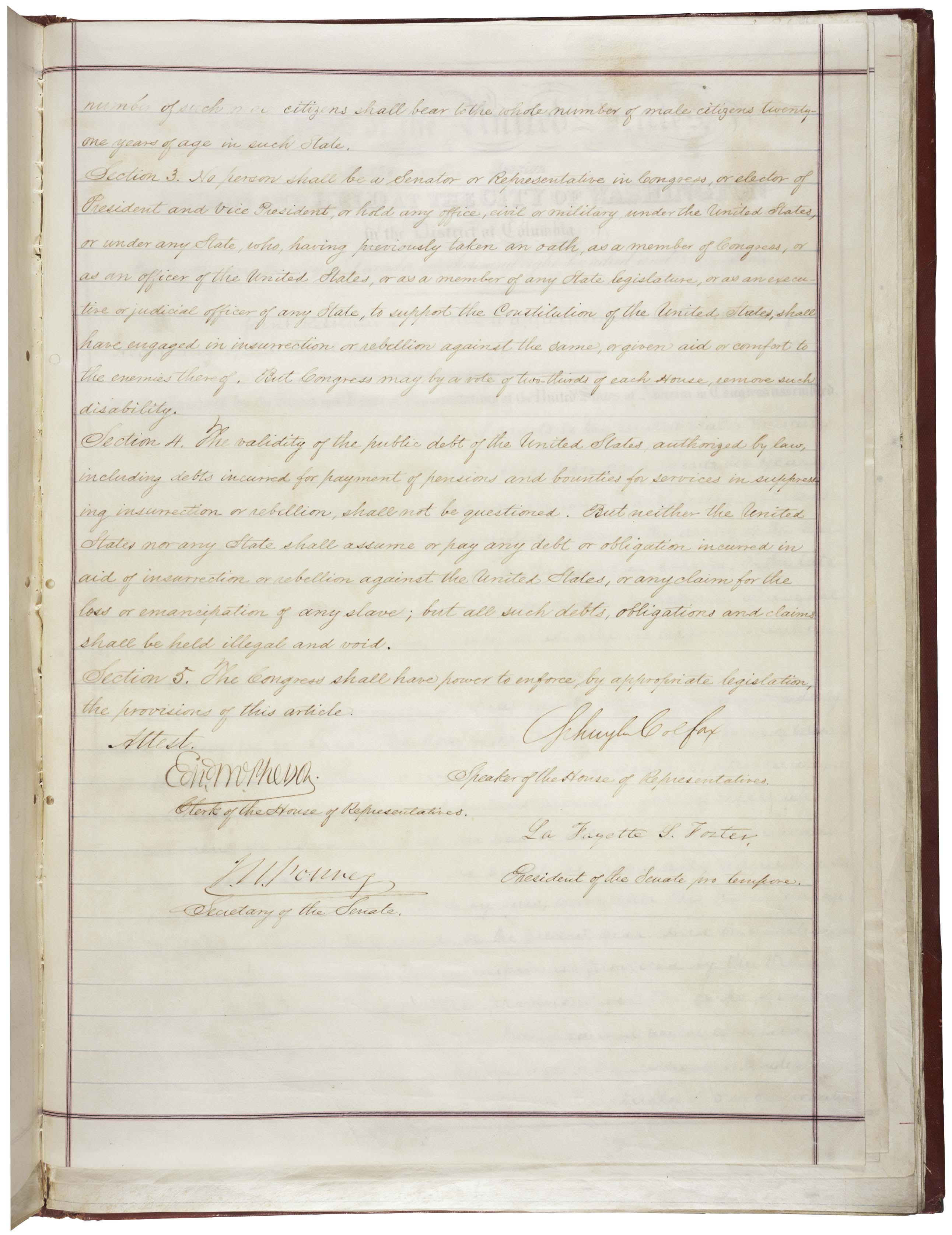
July 28, 1868:  The 14th Amendment to the United States Constitution was passed.  Among other things, it applied due process and equal protection to the States, one of the most significant developments in constitutional law to a criminal defense lawyer.  In honor, Blawg Review #170 is dedicated to great posts in the spirit of the 14th.

The 14th Amendment Mark Bennett, the Texas Tornado, challenges the prosecution’s attempt to skew the jury by asking a trick question in voir dire, whether a juror would convict based on the testimony of only one witness if that witness proves their case beyond a reasonable doubt.  Is this trick used by all prosecutors, or just prosecutors for hire?  More about jurors, the brilliant and articulate Anne Reed at Deliberations posts about the awkward situation (that’s no doubt happened to all of us at one time or another) when a juror, so taken with summation, applauds.  The judge questioned the other jurors to be sure it didn’t impact their impartiality, but isn’t the point of summation to influence the jury? 

Gideon, at the pain-stakingly  redesigned  A Public Defender, analyzes a California Supreme Court decision holding that  a defendant has no right to allocute unless the prosecution can cross-examine, and concludes it’s just silly.  Dan Harris at China Law Blog, deals with the silliness of Guanxi culture, preferring instead an “Asian” meal with Anthony Bourdain (not Rachel Ray?).  Enjoy another country’s culture and don’t sweat the details, Dan says.  They’ll understand and appreciate it. 

At Underdog, Jon Katz questions why some criminal defense lawyers are happy to party (and even buy the drinks!) with cops and prosecutors to be part of the club.  He’ll hang with lawyers who show some self-respect instead, like  Austin Criminal Defense Lawyer Jamie Spencer, who explains “the trick” when cops identify the defendant as the villian, made a bit easier by the fact that he’s the guy sitting next to the defense lawyer.  But every now and then, a miracle occurs when the cop tells the truth and admits he hasn’t a clue.  Nothing screws up trial prep more than an honest cop.

The Innocence Project, having made more than a few miracles of their own, posts about Marty Tankleff’s thoughts on reform, following the dismissal of charges that he murdered his parents.  But Bob Tarantino at The Ego Has Landed isn’t buying, promoting the notion that the more in prison, the merrier.  Can’t we all just give mandatory minimums one more chance, Bob asks?  Nope, responds S.Cotus at Appellate Law & Practice, wondering why it’s acceptable for prosecutors to go after poor people for acting like, well, poor people.

Eric Turkewitz at New York Personal Injury Law has outed former Westchester DA Jeanine Pirro after her chauffered SUV sideswiped a Harley, but the cops “fixed” the report to leave the Judge Judy wannabe out of it.  Jonathon Turley notes that controversial columnist, Robert Novick, had his own hit and run issues this week.  though he somehow avoided being tased 19 times for his own protection.

Scott Henson at Grits for Breakfast posts about Dr. Robert Burton’s  great new book on eyewitness IDs, and  how people can be so certain yet so utterly wrong.  He also writes about how the  impact of price increases in fuel and water are increasing the cost of incarceration, and how facilities are trying find ways to reduce their costs (like letting people who shouldn’t be there out?).  Dan Hull at What about Paris Clients? is also concerned about high costs, since he’s headed back to London, where the locals aren’t too thrilled about living with the consequences of America’s self-induced recession economic downturn. 

Holden Oliver, who knows  Hull’s affect on the opposite sex only too well, has yet to publicly reveal that the true purpose of Dan’s trip to London is to persuade dear Ruthie not to leave the world of blawging behind, no matter what horrible Japanese phrases Geeklawyer has bestowed on her.  He would have sent her an email note, but that would have been  “low and tacky.” And if Dan blows it with Ruthie, CharonQC may have a new contender for his Idiot Medal, though competition this week is  < a href="http://randazza.wordpress.com/2008/07/26/memphis-police-sue-to-out-anonymous-critic/">quite steep.

In perhaps the longest and then shortest posts of the week, Mike Cernovich (sans the  media darling Norm Pattis, who has retired from the blawgosphere to study Chinese food menus (at the urging of Dan Harris, perhaps?) of Crime & Federalism runs the gamut from the brilliant, but very lengthy, video of Predictably Irrational, a fascinating explanation of how real people behave, fitting snugly into what you get for the money at the Trial Lawyers College, though nobody seems to be voicing any complaints (which would only be rational).  Marc Randazza, the Legal Satyricon himself, was conflicted when forced to choose between the 1st Amendment and protecting animals.  Not surprisingly, Randazza went for the cute and fuzzy 1st Amendment.  

Randazza probably should have read Sharon Nelson’s Ride the Lightning post about surveillance cameras on cruise ships before Randazza went on his honeymoon.  Too late now, Marc (pass the popcorn, please).  But then, it’s nothing compared to the Turk’s secret to “marital bliss” revealed in his banned Ben & Jerry’s birthday video.  But compared to Allison Margolin, “L.A.’s Dopest Attorney,” according to Dan Slater at the WSJ Law Blog, Turk’s got quite a way to go to create a sexpot image to “socially isolated men.” 


“People are talking about how [marijuana is] being over-recommended and abused,” Margolin said. “I mean, big ******* deal. It’s not toxic!” Margolin told [New Yorker author David] Samuels that she has a doctor’s letter, required in order to buy from a dispensary, because she suffers from anxiety.

And isn’t that what all clients really look for in a criminal defense lawyer?  Don’t bogart that joint, Al baby.  Same for that Gerber baby, as Seth at Quizlaw points out that while California may be “different”, you have to go to the Sovereign Nation of Texas to appreciate ways to make Floridians look almost normal.

The Queen of New York Bloggers, Nicole Black at Sui Generis points out that no lovely blue box is going to change the fact that Tiffany’s efforts would be better spent defending its mark than suing eBay, but it has yet to adapt to life in the internet lane.  The same cannot be said for Ken Lammers of CrimLaw, who tell us in  last week’s CLTV (like General Hospital for the law) that he is not the CrimBlawger we need, but the one we deserve.  Ken lives at the cutting edge of high tech, and proves that the camera doesn’t add 10 pounds.

In the most significant lawprof dispute since the Harry Potter/Ministry of Magic debacle, Ilya Somin at Volokh Conspiracy squares off with  Stephen Bainbridge over the critical issue of whether  Batman is a libertarian :


The Batman story is also an interesting quasi-libertarian commentary on the shortcomings of government. Like the Mafia portrayed in The Godfather, the necessity for Batman’s sometimes dubious methods arises because of the government’s failure to protect people and their property against predation. This point is effectively emphasized in both The Dark Knight and Batman Begins. In that respect, Batman is similar to The Godfather in conveying skepticism about government, its motives, and its ability to effectively fulfill even the core “minimal state” function of protecting the public against violent crime.

In response, Bainbridge notes that given the damage Batman does, Gotham City would be better off without white-collar corporate criminal Bruce Wayne.  Hey, maybe he is a libertarian after all?
Paling in relative significance is the debate between Jim Chen at MoneyLaw (not what you think) and Dave Hoffman at Concurring Opinions over whether tenure creates the “Deadwood Effect, stemming from MoneyLaw’s favoring baseball and football over hockey, a position promptly reversed based on something called “Arschlochkeit”, and Dave’s rejection of the Deadwood Effect from tenure, and all the posts in between, ultimately concluding with Jeffrey Harrison’s  Ode to Wood.  There’s some meaningful analogy in all this, no doubt, but I haven’t clue what it is.

And almost too trivial to mention, Volokh Conspirators Orin Kerr and Paul Cassell are mud-wrestling over how the exclusionary rule plays with originalists. Orin argued that suppression is consistent with originalism, but Paul reponded, “nu-uh.”  Orin then explained that his caselaw was bigger than Paul’s, ending debate.  While lawprof mud-wrestling is always fun, it’s nothing compared to Brent Trout’s post at BlawgIT about a potential $8 Billion dollars worth of internet patents that may be invalid.  Wow, isn’t that more than Paul made as a federal judge?

Susan Cartier Leibel at Build a Solo Practice posts about why being a solo can actually make you happier.  But Doug Berman at Sentencing Law and Policy wasn’t very happy when, after a post about the sentence of one “Spam King,” and a flippant post about the escape of another, the latter ended in a horrible double murder/suicide, which no one could have anticipated.  It’s a reminder to blawgers that even stories that start out funny may end in tragedy.

Another “tragedy” for many in the blogosphere occurs when someone steals posts, as catalogued by Jonathon Bailey at Plagiarism Today, with a list of 43 links in this weekend’s linkroll.  Jonathon’s site includes stock letters and tips to deal with plagiarists.  Bad Court Thingy thinks that baby boomers have stolen the future of the Slackeiosie, but advises his fellow Gen “Y”ers to play the game until they can pay us back when they stick us in the home.

Mark Draughn at Windypundit, taking a breather from defiling beautiful women by his photographic limitations,  posts about New Orleans trying to pad their stats by treating marijuana possession as a felony.  David Lat at Above the Law is dealing with weightier feminist issues in his Sapphic series about the Lindquist & Vennum summer associate kiss. Not that there’s anything wrong with that.

One might expect Ann Bartow at Feminist Law Professors to be all over this bit of salacious news, but it appears that she’s quite the “nervous nellie” when it comes to taking on Lat, the king of Biglaw titillation.  Others, like Colin Samuels at Infamy or Praise,  appreciate schadenfreude wherever they find it.  I wonder if Lat will have as much fun wearing a suit as he did in a bathrobe?

Anne Skove at Court-o-Rama (the least dangerous blog) promotes the tuerducken of  parole-like involvement in criminal prosecutions early in the process, rather than, say, afterward, which I guess means defendants could complete their sentence before the case goes to trial.  Andrew Bluestone at New York Attorney Malpractice Blog discusses malpractice liability for referrals, which would surely come my way if any attorney to whom I referred a case agreed to let the defendant be quasi-sentenced before conviction (or acquitted, as can happen in Texas).

Skelly at Arbitrary Carpricious, meanwhile, posts about a Toyota “Pious” with an anti-Walmart bumper sticker on it, which he says is “bound to enlighten the families of my clients, who own the primer-gray beaters . . . and who don’t know how they’re going to pay the bill for detention and groceries and gas this month.”  This contrasts nicely with Carolyn Elefants’ question at My Shingle about the effectiveness and propriety of lawyers offering 99 cent gas promotions, which could resolve at least one of Skelly’s problems. 

Weddingruined3g Netiquette savant, half of the famous 70’s disco duo, ”
Bros in ‘Froes,”* style-trend setter, and conscience of the blawgosphere, David Giacalone at f/k/a raises a very serious problem with attorneys engaged in debt negotiations, taking huge up front fees that bear neither connection to the extent of services provided nor successful results. After dissecting the practice area in detail, he wonders whether lawyers are willing to take a stand, or do they fear that their houses may be made of glass as well.  This inspired Charles Phelan at The ZipDebt Blog to provide a history of debt settlement fees, now that he was no longer the only voice in the wilderness cursing this insidious practice.  Nice to see so many other lawyers in the blawgosphere speak out on the subject, demonstrating their deep concern for the integrity of the profession.

Mark Hermann of the Beck/Hermann duo at Drug and Device Law posts about how the pharmaceutical manufacturers will get caught in the middle with the new PhRMA Voluntary Guidelines that are great excep that they expose them to liability for taking drugs off the market when dangerous side effects are found.  No good deed goes unpunished.  I can almost hear Gerry Spence rail at the drug companies, “Slave, Slave, Slave,” except that he has ny sympathy for the corporate masters.  Maybe a day of silence at the Thunderhead Ranch makes a lot more sense than I thought? 

At Balkinization, Marty Lederman posts a detailed analysis about Attorney General Michael Mukasey’s effort to use last-ditch fear-mongering to overcome the Boumediene decision and deny due process to anyone the administration decides to call an “enemy combatant.” regardless of the absence of evidence, for the “duration of the conflict.”  This isn’t the Michael Mukasey before whom I appeared, and I can’t understand how or why a judge who had a firm sense of due process turned into a shill for the most unAmerican of causes. Marty says this effort is futile.  We can only hope.

Some, by now, may be asking, “what do all these posts have to do with the 14th Amendment?”  Everything, I respond, because everything we do as lawyers and in the law ultimately bears upon due process and equal protection, whether positively or negatively.  There is nothing more fundamental to the law.  And that’s how this criminal defense lawyer sees the world and the blawgosphere. 

And if you’re wondering why there’s a picture of a 1964 Austin Healey BJ8 (driven by my 14 year old son and second biggest critic, Jack, who thinks Canadians are tres weird based upon the  stolen vehicle of choice, per Law is Cool, [“as if”, Jack says]), it’s because that’s what I would have been doing this past glorious weekend had I not let the anonymous Ed. “persuade” me to do this Blawg Review. 

* The other half of the duo is believed to be the only known photograph of the anonymous Ed., so don’t look at it.  If you’ve already looked, gouge out your eyes if you haven’t done so already.

Blawg Review has information about next week’s host,  The IP ADR Blog, and instructions on how to get your blawg posts reviewed in upcoming issues.
Corporations Just Don’t Behave Like Other Defendants

Mike at Crime & Federalism raises fascinating issues when corporations rather than individuals become embroiled in the criminal justice system, via this Cato Institute White Paper by N. Richard Janis.

From Janis’ synopsis:

To avoid the potential catastrophe of a federal indictment, business firms are taking extraordinary steps to placate federal prosecutors. And those prosecutors now regularly insist on the following:


  • That business firms surrender or “waive” their attorney-client privilege,
  • That firms must pressure their employees to waive their constitutional right against self-incrimination,
  • That firms facing indictment refuse to advance legal fees to employees under investigation — even if a firm concludes that an employee was just following directions or is otherwise innocent of any wrongdoing, and
  • That embattled firms must discharge certain employees at the direction of the government — even if a firm concludes that an employee was just following directions or is otherwise innocent of any wrongdoing.

Any organization that balks at the government’s demands risks months of negative publicity as prosecutors characterize a legal defense as “impeding” or “obstructing” the investigation. It is no overstatement to say that the enforcement of the criminal law, at least insofar as it applies to investigations of organizations, amounts to a state-sponsored shakedown scheme in which business firms are extorted to pay penalties that are grossly out of proportion to any actual misconduct.

While this may be something of an overstatement, it captures the general sense of what it means to be a corporation under the Justice Department’s gun, and includes the various weapons that can be threatened, and brought to bear, on the corporate defendant.

When an individual becomes a target, there are usually three basic differences: The government quietly investigates first and the targets first notice is the 6:30 a.m. knock on the door when he’s arrested.  Second, the individual has but one interest at this point: not going to prison.  Third, the decision-making is done by a committee of one.

The structure of prosecutorial pressure applies in an entirely different way to a corporate entity.  First, the “corporation” doesn’t worry about going to prison, but rather about adverse publicity and loss of profits.  While some individuals may end up in cells, other individuals within the corporate structure are not at risk and are fully prepared to jettison their former lunch-mates for the “good of the business,” which is directly connected to their stock options.

The corporation learns of its target status via its general counsel, a lawyer for the corporation but not for any individual within it.  So we begin with an inherent conflict, since corp counsel is a part of the target entity, may potentially have his butt on the line, and his love and devotion to the business is now contrasted with his love of family and lifestyle.  As counsel, he becomes the first mind tapped for answers, often drawing upon his former prosecutor status as expertise.  Guess what his advice will be?

But corporations are run by committee, which take a sudden interest when their livelihood is at stake.  They are faced with what superficially appears to be two clear choices, one very hard and dangerous and the other very easy and smooth.  Moreover, most of the committee members are fully vested in the “system”, meaning that they see themselves as the good guys and want to stay that way.  Good guys work with the government.  Bad guys fight the government.  If there’s some bad guys in the corporation, then root out the evil and cleanse the business of those who would cause its destruction.  Clean and smooth. 

Corporations are risk-averse by nature, and want nothing to do with anything perceived as a low-percentage play.  Even when they’ve done nothing wrong, or at least have acted in accordance with accepted industry standards and practices, the possibility of threatened ruin is all it takes to make bold men quiver.  Men in neckties are poorly suited for a prison camp. 

The sum of these parts is a very large, very powerful, very wealthy beast that is afraid of its own shadow.  The government plays “divide and conquer,” and the corporation begs to be allowed the opportunity to give itself up, at its own expense.  Anything to save the corporation, even if it has to sell out a bunch of highly paid executives in the process.  But most of all, it’s a business decision to buy itself out of the government’s sights, and the rest is just a matter of negotiation.

For the government, this is like shooting fish in a barrel.  No matter how big and strong the target may be, its structure and goals make it functionally impossible to mount a fight.  Corporations lack both the will and the way.

Just in case the target pushes back a bit, the government then pulls out the heavier artillery by arguing that resistance itself is criminal, or that supporting the fight by individuals within the corporation is unlawful.  At each level, the government challenges the corporation to see just how strong their will is, since each effort will bring new potential harm to the corporation.

As Janis correctly notes, this empowers the government to dictate to corporations what they must do to cleanse themselves in the eyes of the government, and regardless of whether the government is right, regardless of whether the corporation agrees, the committees succumb to the pressure rather than risk it all in their fear of the government’s power.

As Mike correctly notes, the Arthur Andersen saga shows what the government can do to a business, even when it committed no crimes.  Indeed, I suspect that a significant number of government investigations into corporations involve monumental overreaching or, at best, criminal prosecutions for questionable civil wrongs.  Many federal prosecutors and agents assume a level of knowledge and understanding about commerce, practice and crime that is well over their heads, but they believe they know and that’s all it takes.

While it’s hard for many to muster much sympathy for large corporations, the by-product of these prosecutions is reduced availability of products and services, increased costs (since they naturally need to pass along these huge fines to customers and consumers) and encouragement to the government to go after the next easy target.  And then there are all those loyal employees who suffer when the big guys get scared.

I look forward to more of Mike’s analysis of the Cato White Paper.  But until the decision-makers in corporations start thinking like individual defendants and standing up against the government, they will continue to be easy targets and cave to the government’s threats. 

Cop Love Sunday

Over the past few days, there have been a bunch of comments on an old post about Eric Bryant’s citizen complaint against Police Officer Chadd Stensgaard.  Finally, a reader was kind enough to let me in on the reason. 

It seems that Bryant’s charge was finally tried, and Chadd was convicted.  From Portland Mercury Blogtown :

Stensgaard was found guilty this afternoon of parking in a no parking spot while he went inside the restaurant to get take out food on the middle of his shift, and fined $35 by traffic court Judge Terry Hannon. The case against Stensgaard was brought by newly-qualified lawyer Eric Bryant, who happened to be eating in the restaurant when Officer Stensgaard came in to grab a bite to eat, earlier this year.

Bryant asked Stensgaard why he was parked illegally, but the cop told him he could do what he wanted, and went back to watching a basketball game on the restaurant’s TV, Bryant alleged. So he decided to take the cop to court using an Oregon statute that lets citizens file citations with the District Attorney. And it turns out, Bryant was in the right.

To his credit, Stensgaard took the verdict stoically, as shown in this photo of him at trial, where he carefully studied Bryant’s every feature just in case he ever sees him again in a fine dining restaurant.

stensgaard.jpgStensgaard’s PBA lawyers pulled out all the stop in his defense:


“Lawyers for Stensgaard argued he was justified in parking outside the restaurant because his patrol car contained guns and expensive equipment that could be dangerous if it fell into the wrong hands. But the judge ruled that while he felt the officer had acted reasonably, the parking laws apply to everyone. Including cops. “


“Bryant’s attorney asked Stensgaard why he couldn’t have gone to a McDonalds or a Starbucks nearby, somewhere where he could have parked legally.”


“I don’t eat fast food,” Stensgaard responded. “And I don’t drink coffee.”


This verdict has caused great consternation amongst law enforcement officers in the Portland area and elsewhere.  So it seems to me that the point has been made that cops are supposed to obey the laws, even though they have a bunch of excuses about how they have to break the law to save us from evil villians, not to mention consider it a perk of the job to ignore the law whenever convenient for them. 

But now, they are feeling a bit unappreciated, even though no self-respecting, he-man, sanctimonious cop will admit that he needs or wants our love and devotion but only that he does the “Job” because he wants to beat up perps for fun and profit.

And the simple fact is, we do need cops, and their inability to take constructive criticism because of their fragile self-esteem does not mean that we should kick them while they are down.  Therefore, I hereby proclaim today “Cop Love Sunday” and ask everyone to tell us their favorite story about a good thing a cop did for them.

Come on now, let’s show them that we really do appreciate what they do for us, even if they aren’t perfect.
 

The Birth of a New Niche, Hired-Gun Prosecutor?

For those who follow the doings of the Sovereign Nation of Texas, this news has already been broadcast by Houston criminal defense lawyer Mark Bennett.  But for the rest of America, this may come as bit of a surprise.  It seems that Kelly Siegler, a former prosecutor with the Harris County District Attorneys office, has decided that her prosecutorial gifts are bigger than Houston and she must make them available to the world.

No!  I’m serious.  This is no joke.

At a blog called Women in Crime Ink, Siegler identifies herself as “prosecutor for hire.”  Her marketing strategy is to play upon the belief that crime is rampant and criminals are walking free because the run-of-the-mill prosecutors are incompetent cowards, afraid to take on any case that isn’t a slam-dunk.  She includes a picture of Nancy Grace in her post, though never explains whether it’s because she loves her or hates her. 

So here’s the “problem” with criminal law, according to Siegler:


The real problem is that far too many prosecutors are worried about taking on a d ifficult case, a case that is not a slam-dunk or a whale (“as easy as harpooning a whale in a barrel,” as we say in Harris County, Texas). Too many prosecutors demand that the cases presented to them for the filing of charges come to them with all the questions answered and wrapped in a pretty, little bow.


So why is this “chicken” attitude such an unknown problem? Simple. Primarily because prosecutors don’t usually talk about it. And those same righteously upset cops don’t typically tattle about it; they just try to figure out a way to work around the problem. So instead of officers being able to go to a prosecutor to seek advice on an investigation, what happens more often than you would ever expect is that the officers find the prosecutors they are forced to deal with to be an obstacle in their investigations.

And that is a tragedy.


This is for real.  I swear.  It’s not that there are too many crimes, too many innocent people going to prison, or too many cops and prosecutors playing fast and loose with the Constitution.  No, no, no.  Just the opposite, with lilly-livered prosecutors letting killers roam the streets rather than life a finger to take them on.  I bet you didn’t know that before, and really appreciate Kelly spilling the prosecutorial beans.

The typical path for an ex-prosecutor is to become a defense attorney and try to convince defendants that you will use your old connections to finagle a sweet deal for them, a scam that many defendant will buy because they believe that law is all about backroom deals to begin with.  But for some, the idea of defending criminals is just so disgusting, so horrific that they would never live with themselves.  What then?


KELLY SIEGLER

KELLY SIEGLER      “She’s finger lickin’ good!”
PROSECUTOR-FOR-HIRE


So from now on, when you’re unhappy with the kid prosecutor that’s been assigned to your case, or when the ADA tells you that there’s not enough evidence, you don’t have to take it anymore.  Just gather up your pennies and call Kelly Siegler, Prosecutor-for-Hire.  She’s no gutless wonder, like the rest of the people she used to work with and now smears for a little cash up front.  I wonder if she guarantees a conviction?

Only in Texas.

Judge Gertner Rejects “False Uniformity” in Sentencing Guidelines

One of the gravest failings of the federal sentencing guidelines has been its failure, or actually its refusal, to distinguish between the drug kingpin and the delivery boy.  While this is an argument that has been made innumerable times in an effort to persuade a judge to make a downward departure and risk reversal, the plain fact is that the United States Sentencing Commission realized the problem and chose to ignore it.

Fortunately, one of the boldest and smartest on the federal bench, Massachusetts District Court Judge Nancy Gertner, empowered by Gall and Kimbrough, has issued a decision that calls it the way it is.  In U.S. v. Cabrera, via Doug Berman at Sentencing Law and Policy, Judge Gertner explained why quantity-based sentencing is absurd for the “little guy” in the middle of a big drug deal:


Oscar Cabrera (“Cabrera”) was, at most, a delivery man caught in a government sting. He hardly fits the profile of a major drug dealer.  He was told — apparently at the last minute — to pick up the drugs that undercover government agents had brought from Texas.  At the time of the deal, he was homeless, living out of his car; he had little or no idea about what was going on in the drug deal; he had no role in negotiating it, no money with him at the time of the sting, and was not remotely capable of investing in this drug transaction, or for that matter, any other.The real purchasers did not trust him with much, and surely not the drug money. He was to receive perhaps $250 to $500 (the amount was never set) for drugs valued far, far more than that. He had no prior criminal record. The agents had no idea who he was prior to his arrest. The real purchasers got away.  Cabrera was caught — quite literally — holding the bag.

This scenario is commonplace.  What isn’t normal is that the judge had been able to take reality into account in dealing with the Cabreras of the world.  Nobody is saying that Oscar is a poor innocent fellow for his involvement in a drug deal.  But he isn’t a drug kingpin either, though in the past he would receive a sentence only slightly less than the person at the top of the foodchain, assuming he received a minor or minimal role adjustment and possibly safety valve.


The statute under which Cabrera was prosecuted, and the Federal Sentencing Guidelines, focus largely on the quantity of drugs the defendant had, minimizing the significance of other relevant — and important — questions, like the defendant’s real role in the offense or his background….  If I were to follow the Guidelines and sentence Cabrera solely on the basis of the drugs government agents brought with them, the result would be a classic case of false uniformity. False uniformity occurs when we treat equally individuals who are not remotely equal because we permit a single consideration, like drug quantity, to mask other important factors.  Drug quantity under the Guidelines treats as similar the drug dealers who stood to gain a substantial profit, here the purchasers who escaped, and the deliveryman, Cabrera, who received little more than piecework wages.

The assumption, implicit in the guidelines, that everyone involved in a drug deal shares relatively equal culpability has long been painfully ridiculous, and yet has been the basis for federal sentencing since 1987.  Judge Gertner writes:


[T]he Sentencing Commission has never explained how drug quantity is meant to measure offense seriousness, and significantly, how it correlates with the purposes of sentencing under 18 U.S.C. § 3553(a). The only explanation, which one has to infer from the Guidelines, is that drug quantity is somehow a proxy for culpability. The problem is that sometimes it is an adequate proxy, and sometimes it is not.

What is shocking is not the obviousness of Judge Gertner’s decision, but that judges were compelled to sentence based upon quantity-dictated guidelines for 20 years despite their absurd result for so many defendants.  Much as a I hate to say this, many judges before whom I appeared in drug cases didn’t seem to have any serious qualm with sentencing the “little guy” to decades in prison. 

It remains to be seen whether Gall and Kimbrough will have the impact on Circuit Courts of Appeals that the Supreme Court intended (as in telling them that they really meant what they said in Booker), and whether the sanity of Judge Gertner’s decision will survive review, but her point is clear and undeniable. 

Sadly, this does nothing for 20 years worth of “little people” sitting in prison for the better part of their lives to honor the false god of uniformity.

More DNA Follies: The Context Effect

An email from Forensic Bioformatics alerted me to yet another rather surprising problem with the dreaded magic of DNA.  I, like most lawyers, maintain a somewhat idealized vision of science.  While “junk science” has long been on my radar, “real science” is still on a pedestal, mostly because I want to believe that somebody out there is more dedicated to the truth than to the conviction.  Naive, as we well know, but still true.

Bioforensics, however, burst my bubble again by alerting me to yet another problem with DNA testing, the Context Effect.  As we push to improve identification procedures in light of the overwhelming studies that show that eyewitness IDs are replete with flaws, it appears that many of the same problems exist with DNA.

Picture the DNA analyst given a sample from a suspect in a crime and asked to compare it for a match to a sample found at a crime scene.  That’s the scenario address in this White Paper by Bioforensics.  The analyst, knowing what he’s dealing with, will try very hard to make the match, and his knowledge of what he’s got in hand will influence the way he “interprets” fuzzy areas.  Objective interpretation becomes subjective, and fuzzy becomes clear when the analysts knowledge affects his judgment.

When I asked if there were any good examples of this happening, a big one came back at me.


Examples of context effects in forensic science are unfortunately not difficult to find.  One of the most famous is the Brandon Mayfield case, where several FBI fingerprint experts “matched” his print to fingerprints found on a bag of explosives material found in connection with the Madrid train bombing.  The FBI’s fingerprint software listed Mayfield as a potential match, so the analysts were more likely to try to match the prints.  Mayfield was later found to be completely innocent.

That’s certainly a fairly clear example of how objective science turns subjective.  Jason Gilder has provided me with a powerpoint showing the problem in more scientific terms, This entry was posted in Uncategorized on by .

A “Spam King” Snaps (Update)

From ABC7 News in Denver, via Turley, the shocking and tragic end of “Spam King” Eddie Davidson, who escaped from a minimum security federal prison and then engaged in an unthinkable murder-suicide.


Escaped “Spam King” Edward ‘Eddie’ Davidson, his wife and 3-year-old daughter were found slain outside a farm house Thursday east of Denver in an apparent murder-suicide.

What a nightmare, and such a coward,” [U.S. Attorney Troy] Eid said. “Davidson imposed the ‘death penalty’ on family members for his own crime.”


Arapahoe County undersheriff Mark Campbell said deputies rushed to a home in a subdivision in Bennett after receiving reports of shots fired.


Deputies found Davidson, who appeared to be the gunman on the driver’s side of the SUV in a driveway, and a woman dead on the passenger side. A girl was also found dead in the back of the car.


An 7- or 8-month-old baby boy was found in a car seat uninjured.


Davidson was sentenced to 21 months, and had to pay $714,139 in restitution to the IRS, as well as forfeit property purchased with proceeds.  While this isn’t exactly a slap on the wrist, it also isn’t a particularly harsh sentence.  Certainly not so harsh as to explain what he did.

That Davidson took the lives of his family as well as his own bespeaks serious psychological problems.  Eid’s attempt to characterize an utterly irrational act in self-serving terms does a disservice.  Davidson was sick, for only a horribly sick person would do something like this.

It is no one’s fault except Davidson that he suffered the penalties for his conduct.  But it begs the question why no one noticed that this person was so psychologically fragile that he was about to explode, and kill his wife and child in the process.  This is a recurring theme in criminal law, as so many of our clients suffer from illness that has escaped detection and treatment.  They end up in prison, sometimes, but leave no better than when they arrived.

The closest person (outside his family) to Davidson was likely his lawyer.  Did he see this coming?  Did he recognize that his client was at risk?  It’s unlikely that anyone could have foreseen what would ultimately happen, the murder of Davidson’s wife and child, but was there any indication that Davidson couldn’t handle the consequences of his crime?

It’s easy to call Davidson “a coward,” and perhaps that’s an element of what happened, his inability to face his sentence.  But calling names deflects attention from the problem, and does nothing to save the life of a child from a coward’s bullet. 

It would be nice to expect the government to recognize and treat psychologically troubled prisoners in their custody, but the plain fact is that they are only interested to the extent that it makes their prisoners easier for them to warehouse.  Even then, there’s no concern about the illness, but only its manifestation and impact on the system.

So as criminal defense lawyers, let us remember that we are likely the last resort to ascertaining whether a client suffers from mental illness, is going to snap and will be psychologically unable to deal with a sentence.  Yes, we are not trained to do so, but there’s no one else after us who will care.    

It will be hard for people to muster much sympathy for Eddie Davidson.  But if you can’t see this as a tragedy for him, see it as a failure of the system for his wife and child.  And let us do as much as we can to avoid this happening again.

Update:  I’ve just read Doug Berman’s post on this tragedy, and he has one additional piece to the puzzle from a Denver Post story that I wasn’t aware of:


Assistant U.S. Attorney Tim Neff said Davidson had become a “consultant” to the FBI investigating other spammers.

Should the AUSA have seen something?  If he had, would he care?  This adds another dimension to the failure to recognize that Davidson was about to snap. 

If a Defense Lawyer Ruled Texas

Unlike here, where it seems that those readers who philosophically disagree with some of the positions prefer to vent their anger by indulging in bizarre rants, the Texas Tornado, Mark Bennett, has developed a better rapport and perhaps even a grudging admiration from the opposing team.  He certainly has my admiration, but then I’m easy.

In fact, a prosecutor has gone so far as to write a play (a la the Little Rascals?) as an homage to Bennett and his views.  There can be nothing more flattering than to have one’s adversary take the time to create such a thoughtful and very funny vision of life if dreams came true.

Here’s a snippet:


PJ: What? Aren’t you going to arrest him? He just robbed me?
Sgt: I don’t know where you grew up, son, but around here we have something called the presumption of innocence.
PJ: That’s for the courtroom! He just robbed me! He had a gun! He’s a dangerous criminal!
Sgt: It’s not our place to decide that. That’s what juries are for.
PJ: Aren’t you going to at least search him for evidence? He might still be armed.
Ofc. Texas: Already checked. No gun. But he did have THIS (holding up bankers bag)
PJ: That’s my money!
Sgt: (to Texas) Make a note of that. (Handing bag to Defendant) You’re free to go.
PJ: You’re letting him have it?
Sgt: We don’t have an authorized forfeiture order for it. Ever heard of the 4th Amendment? That’s considered an unreasonable search and seizure now. And besides, how do we know it’s yours?
PJ: Because the bag says “PJ’s PrestoMart” on the side.
Ofc. Texas: He’s got a point, Sarge.
Sgt: Alright, then. (Opens bag, empties $17500 in bills out and hands money to Defendant, then hands bag to PJ) You’re free to go.
PJ: But that’s my money!
Sgt: A jury will have to decide that, pal. Everything in its place.

Go read the rest.  I believe that the option is still available for major motion picture rights.